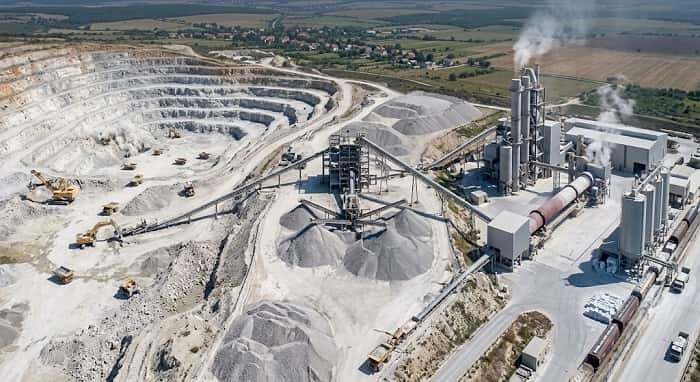
Limestone is one of those minerals that quietly builds modern India. It may look like an ordinary rock, but it stands behind cement, concrete roads, bridges, flyovers, housing projects, steel plants, sugar mills, chemicals, fertilizers and several construction materials. Without limestone, the cement industry cannot run smoothly, and without cement, infrastructure growth becomes almost impossible.
Its importance has increased further because India is building highways, metro networks, industrial corridors, airports, housing projects and smart urban infrastructure at a fast pace. In 2025, limestone was also brought under a clearer major-mineral auction framework, making mine allocation more formal and transparent across end uses like cement, fertilizer, steel, chemicals and sugar.
For this 2026 list, the ranking is based on limestone production strength, cement-grade limestone belts, mining activity, cement-industry linkage, reserves and recent state-level developments.
Now let’s check out the top 5 limestone producing states in India in 2026.
1. Rajasthan
Rajasthan is the largest and most important limestone producing state in India in 2026.
The state has a very strong limestone belt, especially in districts such as Chittorgarh, Nagaur, Jaisalmer, Kota, Bundi, Sirohi, Pali, Udaipur and Jodhpur. These regions have helped Rajasthan become one of India’s biggest cement and mineral-based industrial states.
Rajasthan’s advantage is its massive limestone reserve base. State estimates mentioned around 2.5 billion tonnes of limestone reserves, nearly 26% of India’s proven deposits, which gives the state a powerful long-term position in cement and limestone-based industry.
Chittorgarh has long been one of Rajasthan’s strongest cement and limestone centres. In recent years, Jaisalmer and Nagaur have also gained major attention because new cement plants are being planned or developed there. Companies already holding limestone mining leases are expected to add large cement capacity in the coming years, which will further strengthen the state’s limestone economy.
Rajasthan deserves the first position because it combines rich deposits, active mining belts, cement plants, strong transport links and proximity to major northern and western markets. Limestone is not just a mineral here; it is one of the foundations of the state’s industrial growth.
2. Andhra Pradesh
Andhra Pradesh ranks second among India’s major limestone producing states.
The state has one of the richest limestone belts in southern India. Important limestone-producing regions are found in Kadapa, Kurnool, Guntur, Anantapur, Nandyal, Palnadu and surrounding areas. The famous Narji limestone of Kadapa region and commercial limestone belts of Kurnool and Guntur have long supported cement and building-stone industries.
Andhra Pradesh’s limestone strength is closely linked with its cement industry. The state has large cement plants, clinker units and mineral-based industrial clusters that depend on steady limestone supply. Limestone from Andhra Pradesh is used mainly in cement production, but some varieties are also used for slabs, flooring and other construction uses.
The state’s mining department has been focusing on operationalising leases, increasing limestone production and granting new leases as part of its 2026–27 revenue target. This shows that limestone remains an important mineral for Andhra Pradesh’s industrial plan.
Andhra Pradesh deserves the second position because it has high-quality limestone, strong cement demand, long mining history and a large industrial base in the Rayalaseema and coastal-linked belts.
3. Madhya Pradesh
Madhya Pradesh stands third among the highest limestone producing states in India.
The state has major limestone belts in Satna, Katni, Rewa, Dhar, Neemuch, Damoh, Jabalpur, Panna and nearby regions. Satna and Katni are especially famous for limestone and cement industries. Satna is widely known as one of India’s important cement centres, while Katni is famous for limestone and marble mines along with cement factories.
Madhya Pradesh’s central location gives it a major advantage. Cement and limestone-based products from the state can move towards Uttar Pradesh, Maharashtra, Rajasthan, Chhattisgarh, Gujarat and other markets. This makes the state strategically important for the cement supply chain.
The state has also been active in mineral auctions and mining reforms. Madhya Pradesh recorded mineral revenue of more than ₹10,000 crore in 2024–25 and has positioned mining as a major part of its industrial development strategy.
Madhya Pradesh deserves third position because it has rich limestone belts, strong cement clusters, central market access and a well-established mining economy. The Satna-Katni-Rewa belt gives the state a permanent place in India’s limestone production map.
4. Chhattisgarh
Chhattisgarh ranks fourth among India’s top limestone producing states in 2026.
The state is better known for coal and iron ore, but limestone is also one of its most valuable minerals. Important limestone-bearing regions include Raipur, Baloda Bazar, Durg, Bilaspur, Janjgir-Champa, Raigarh, Bastar and nearby belts. The limestone deposits support cement plants and mineral-based industries across the state.
Chhattisgarh’s mining sector has grown strongly in recent years. In 2024–25, the state’s mineral revenue crossed ₹15,000 crore, and officials reported estimated limestone reserves of around 2,500 million tonnes. The state also had new exploration projects approved for 2025–26, including limestone-focused work under the national exploration framework.
The state’s strength is its industrial ecosystem. Limestone, coal and iron ore together make Chhattisgarh an important mineral-industrial state. Cement plants benefit from limestone availability, while nearby coal resources and industrial demand improve the business case for cement manufacturing.
Chhattisgarh deserves fourth position because it has large limestone reserves, active cement demand, strong mining revenue and good future exploration potential.
5, Telangana
Telangana completes the list of the top five limestone producing states in India in 2026.
The state has important limestone belts in Nalgonda, Vikarabad, Rangareddy, Adilabad, Mancherial and surrounding areas. Tandur in Vikarabad district is especially known for limestone, cement factories and stone-based industries. The region produces blue, green and yellow limestone used in flooring, wall cladding and slabs, along with cement-related uses.
Telangana’s limestone economy is closely connected with cement manufacturing. Tandur and Nalgonda belts have long supplied raw material to cement units. Limestone from these regions is valuable because it supports both large industrial use and building-stone markets.
Telangana and Andhra Pradesh together hold a major share of India’s limestone reserves, and several commercial-grade deposits are found across the old combined Andhra-Telangana limestone belt. Important areas include Tandur, Nalgonda, Rangareddy and nearby regions.
Telangana deserves a top-five place because it has strong limestone belts, cement units, construction-stone demand and a long history of quarrying and mineral-based industry.
Final Words
The top five limestone producing states in India in 2026 are Rajasthan, Andhra Pradesh, Madhya Pradesh, Chhattisgarh and Telangana. These states support India’s cement, construction, steel, chemical and infrastructure sectors through rich limestone belts and strong mining activity.
As India’s infrastructure demand grows, limestone will remain one of the country’s most important non-metallic minerals for industrial development.