Tea is not just a drink in India; it is a morning habit, a roadside emotion and a plantation story written across misty hills and green valleys. From Assam’s wide Brahmaputra plains to Bengal’s Dooars and Darjeeling slopes, from Nilgiri gardens to Kerala’s high-range estates, every cup of Indian tea carries soil, rain, altitude and labour inside it. The leaves are plucked by hand, rolled in factories, dried with care and finally travel to homes, hotels, tea stalls and export markets.
For this 2026 list, the ranking is based on the latest detailed Tea Board of India production data. The latest full-year state-wise table shows India’s tea production at 1,284.78 million kg in 2024, while the latest May 2026 estimate shows all-India monthly production at 131.60 million kg. The Tea Board’s public table separately reports Assam, West Bengal, Tamil Nadu, Kerala and Karnataka, while some smaller producing states are grouped under “Others.”
Now let’s check out the top 5 highest tea producing states in India in 2026.
1. Assam
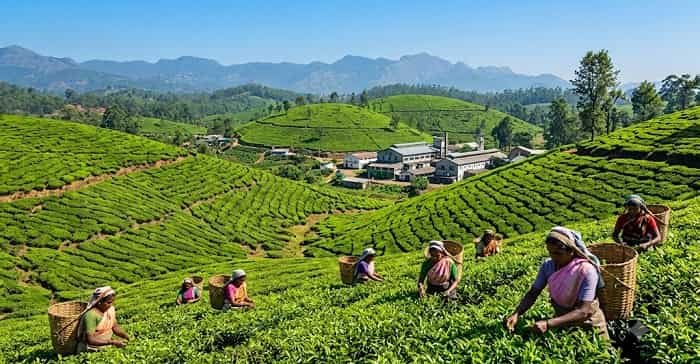
Assam is the largest tea producing state in India and the real giant of the Indian tea industry.
In 2024, Assam produced around 649.84 million kg of tea, which was far ahead of every other state. In May 2026 also, Assam remained on top with 64.70 million kg of estimated tea production for that month.
Assam deserves the first position because tea is deeply connected with the state’s economy, identity and landscape. The Assam Valley and Cachar region together form the main production base. The Brahmaputra valley gives the crop rich soil, heavy rainfall and humid conditions. These natural factors help Assam produce strong, full-bodied tea in huge quantities.
Assam tea is famous for its malty taste, deep colour and brisk character. Tea Board also describes Assam as the largest contiguous tea-growing area in the world and mentions both Orthodox and CTC tea production in the region.
The state is also important for exports, auction markets and employment. Lakhs of workers, small growers, bought-leaf factories and big estates depend on tea. Even when weather problems affect output, Assam remains India’s tea powerhouse.
2. West Bengal
West Bengal ranks second among India’s highest tea producing states.
In 2024, West Bengal produced around 373.48 million kg of tea. In May 2026, the state produced an estimated 42.69 million kg, again keeping it firmly in second place among the separately reported states.
West Bengal’s tea strength comes from three famous belts: Dooars, Terai and Darjeeling. Dooars and Terai produce large volumes of strong tea, while Darjeeling is globally known for premium quality and unique flavour. This gives West Bengal both quantity and prestige.
Dooars-Terai tea is grown in the Himalayan foothill belt of Jalpaiguri, parts of Coochbehar and adjoining areas. Tea Board describes this region as the gateway to the North East and Bhutan, with a bright, smooth and full-bodied liquor.
West Bengal’s advantage is its mix of plantation history, auction access, small tea growers and strong processing units. The state may not match Assam in volume, but it is one of India’s most important tea regions because it combines mass-market tea with premium Darjeeling identity.
3. Tamil Nadu
Tamil Nadu is the third-largest tea producing state in India.
The state produced around 163.92 million kg of tea in 2024. In May 2026, Tamil Nadu’s estimated production stood at 13.63 million kg.
Tamil Nadu’s tea industry is mainly linked with the Nilgiri Hills, one of India’s best-known tea regions. Nilgiri tea is popular for its aroma, briskness and smooth taste. The plantations are spread across high-altitude areas where cool weather and monsoon influence support tea cultivation.
Tea Board mentions that the Nilgiri Hills spread through Tamil Nadu, Karnataka and Kerala, and that Nilgiri tea leaves are plucked around the year because the region is influenced by both south-west and north-east monsoons.
Tamil Nadu is important because it has a strong organised tea industry, experienced growers, factories and a steady supply chain. Its tea is widely used in domestic blends and also has value in speciality and orthodox tea markets.
4. Kerala
Kerala ranks fourth among India’s major tea producing states.
In 2024, Kerala produced around 58.38 million kg of tea. In May 2026, its estimated production was 5.86 million kg.
Kerala’s tea industry is mainly located in high-range regions such as Munnar, Idukki and Wayanad. The cool climate, rolling hills and plantation culture make tea one of the state’s important commercial crops. Munnar especially has become almost synonymous with tea gardens, tourism and hill-station beauty.
Kerala’s tea production is smaller than Assam, West Bengal and Tamil Nadu, but its quality and plantation heritage are very strong. The state produces tea for domestic consumption, blending and premium markets. Tea also supports tourism, local employment and allied businesses in hill districts.
Kerala’s challenge is limited area compared with Assam and Bengal. But with better quality focus, branding and tourism-linked tea experiences, it continues to hold a strong place in India’s tea map.
5. Karnataka
Karnataka completes the list among the separately reported Tea Board state categories.
In 2024, Karnataka produced around 4.50 million kg of tea. In May 2026, its estimated monthly output was 0.39 million kg.
Karnataka is a much smaller tea producer compared with the top four states. Its tea cultivation is mainly linked with the Nilgiri and Western Ghats belt. The state is better known for coffee, but tea also has a presence in select plantation areas.
Karnataka’s importance comes from its location and climate pockets. In some high-altitude regions, tea grows well along with coffee, spices and other plantation crops. The state may not produce large volumes, but it adds diversity to South India’s tea economy.
For buyers and processors, Karnataka tea is a small but useful part of the larger plantation industry. It also shows that tea production in India is not limited to the North East and Bengal; the southern highlands also play an important role.
Final Words
The top five highest tea producing states in India in 2026 are Assam, West Bengal, Tamil Nadu, Kerala and Karnataka, based on the Tea Board’s latest separately reported state-wise production data. Assam is far ahead and remains India’s tea capital. West Bengal follows with Dooars, Terai and Darjeeling strength. Tamil Nadu leads the South Indian tea belt, Kerala adds high-range plantation value, and Karnataka completes the list as a smaller but recognised tea producing state.
Together, these states keep India’s tea industry alive, from daily chai to premium export-quality leaves.