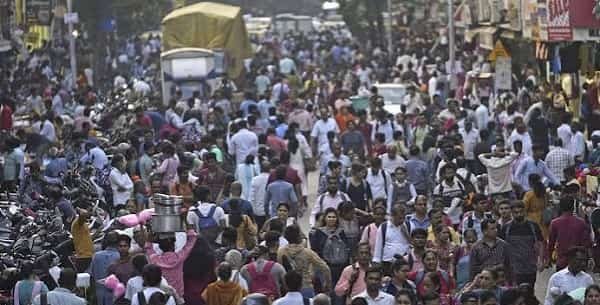
Population density is the silent pressure of human life on land. It is seen in crowded railway platforms, narrow city lanes, busy markets, shrinking farm plots, fast-growing towns, and villages where houses stand close to each other. In India, density is not only about population size. A huge state may have many people but lower density if it has large land area. A smaller or medium-sized state may feel far more crowded if millions of people live within a limited geographical space.
For 2026, one important point must be understood. India’s latest completed Census is still Census 2011, because the 2021 Census could not be conducted on schedule and the next Census is planned as Census 2027. So, this 2026 ranking is based on projected 2026 population and standard state area, not a fresh Census count. The National Commission on Population’s projection report is the main base for such population estimates, and it projects India’s population rising from 121.1 crore in 2011 to 152.2 crore by 2036.
Also, this article covers states only, not Union Territories. If Union Territories are counted, Delhi would easily come at the top because of its very high density.
1. Bihar
Bihar ranks first among the highest population density states in India in 2026. Its projected 2026 population is around 13.28 crore, while its geographical area is only about 94,163 sq km. This gives Bihar an estimated density of around 1,410 persons per sq km.
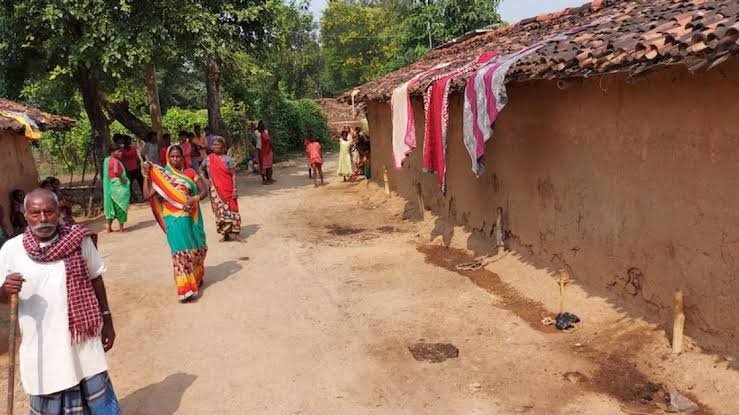
Bihar’s high density is not surprising. It has one of the most fertile alluvial plains in India, supported by rivers such as the Ganga, Gandak, Kosi, Son and Bagmati. Historically, fertile land encouraged settlement, farming, trade and town growth. Over time, the population kept increasing, but the land area remained fixed.
The state also has a very high rural population base. Many families still depend on agriculture, small trade, local services and migration-linked income. Since landholdings are small, pressure on agricultural land is intense. Villages are closely packed, towns are expanding fast, and cities like Patna, Gaya, Muzaffarpur and Bhagalpur are facing growing urban pressure.
Bihar’s density also affects education, jobs, housing, roads, hospitals and basic services. This is why population management, urban planning, skill development and employment creation are very important for the state’s future.
2. West Bengal
West Bengal stands second in 2026, with a projected population of about 10.06 crore and a geographical area of around 88,752 sq km. Its estimated density comes to roughly 1,134 persons per sq km.
West Bengal has always been one of India’s most densely populated regions. The state has fertile deltaic plains, river networks, old trade routes, a strong cultural history and one of India’s biggest urban centres, Kolkata. The Hooghly industrial belt and Kolkata metropolitan region have attracted people for jobs, education, trade and services for decades.
Another reason for West Bengal’s high density is its compact land area. Compared with large states like Rajasthan, Madhya Pradesh or Maharashtra, West Bengal has limited space but a very large population. Its southern districts are especially crowded, while northern districts have their own settlement pressure in plains and foothill areas.
The state’s density creates both strength and stress. It gives West Bengal a large labour force and strong market demand, but it also increases pressure on housing, transport, drainage, wetlands, agricultural land and urban infrastructure.
3. Uttar Pradesh
Uttar Pradesh ranks third in 2026 by projected population density. Its population is projected at about 24.35 crore, the highest among all Indian states, and its area is around 2,40,928 sq km. This gives Uttar Pradesh an estimated density of about 1,010 persons per sq km.
In Census 2011, Uttar Pradesh was behind Kerala in density, but by 2026 projections, it moves ahead because of its large population growth. This makes Uttar Pradesh one of the most important states in any discussion on population pressure.
The state has fertile Gangetic plains, dense rural settlement, large cities, and many fast-growing towns. Districts around Lucknow, Kanpur, Varanasi, Prayagraj, Gorakhpur, Meerut, Ghaziabad, Noida and Agra show strong urban and semi-urban growth. Western Uttar Pradesh has high agricultural productivity and industrial expansion, while eastern Uttar Pradesh has a very large rural population base.
Uttar Pradesh’s high density affects almost every sector: farming, jobs, transport, water supply, schools, healthcare and housing. At the same time, its huge population gives it a massive consumer market and labour force. If managed well, this population can become a strong economic advantage.
4. Kerala
Kerala ranks fourth among India’s highest population density states in 2026. Its projected population is about 3.62 crore, and its geographical area is only around 38,852 sq km. This gives Kerala an estimated density of around 933 persons per sq km.
Kerala is a narrow coastal state between the Arabian Sea and the Western Ghats. Because of this geography, settlement is spread in a long, continuous pattern from north to south. Unlike many states where cities and villages are sharply separated, Kerala has a more continuous rural-urban landscape. Houses, shops, schools, hospitals and roads often appear almost without a break.
Kerala’s high density is also linked with its strong social development. The state has high literacy, better health indicators, high life expectancy and a large diaspora economy. Even though its population growth has slowed, the state remains densely populated because its land area is small.
The challenge for Kerala is not only population density but also land management. Coastal erosion, landslides, wetland loss, road congestion and pressure on housing are major concerns. Still, Kerala shows how a densely populated state can maintain good human development indicators with better education, healthcare and social awareness.
5. Haryana
Haryana completes the top five highest population density states in India in 2026. Its projected population is around 3.14 crore, while its area is about 44,212 sq km. This gives Haryana an estimated density of around 710 persons per sq km.
Haryana’s density has grown because of agriculture, industry, urbanisation and its location around the National Capital Region. Districts like Gurugram, Faridabad, Sonipat, Panipat, Rohtak and Jhajjar have seen strong urban and industrial expansion. Gurugram and Faridabad, in particular, have changed Haryana’s demographic profile by attracting workers, professionals and businesses.
The state also has highly productive agricultural land, especially in districts connected with wheat, rice, dairy and vegetable production. But rapid urbanisation has increased pressure on land. Farmland near cities is often converted into housing, commercial projects, highways and industrial zones.
Haryana’s position in this list shows how population density is shaped not only by birth rate but also by migration, economic growth and location. Its closeness to Delhi has made it one of India’s most urbanising states.
Final Words
The top five highest population density states in India in 2026 are Bihar, West Bengal, Uttar Pradesh, Kerala and Haryana. Bihar remains far ahead, West Bengal continues to be extremely compact and crowded, while Uttar Pradesh has moved higher because of its massive population growth. Kerala remains densely settled because of its small land area and continuous settlement pattern, and Haryana enters the top five due to rapid urbanisation and NCR-linked growth.
In simple words, population density shows where India’s land is under the greatest human pressure. These five states will need careful planning in housing, transport, jobs, farming, water, education and healthcare so that high density becomes a strength instead of a burden.