Amla, also known as Indian gooseberry, is one of India’s most valuable medicinal fruits. It is small in size, but its use is very wide — from chyawanprash, juice, candy and murabba to pickles, powders, hair oils, Ayurvedic medicines and immunity products. The fruit grows well in dry and semi-dry regions, survives tough conditions and gives farmers a strong income option even in areas where many other fruit crops struggle.
For this 2026 list, the ranking is based on the latest available aonla/amla production pattern, major orchard belts, processing strength, market identity and state-level horticulture importance. Amla is not produced like mango or banana on a very large national scale, but a few states have built strong identity around this hardy fruit.
Now let’s check out the top 5 amla producing states in India in 2026.
1. Uttar Pradesh
Uttar Pradesh is the largest and most famous amla producing state in India in 2026.
The state’s amla identity is mainly built around Pratapgarh district. Pratapgarh is widely known for amla cultivation and amla-based products. The fruit grown here is sold across India and also moves into wider markets in the form of sweets, medicines and processed products.
Major amla-growing areas in Uttar Pradesh include Pratapgarh, Prayagraj, Sultanpur, Rae Bareli, Jaunpur, Varanasi, Bareilly and nearby belts. Among these, Pratapgarh holds the strongest brand value. Amla from this region is used for murabba, candy, juice, powder, pickles, laddoo, burfi and herbal products.
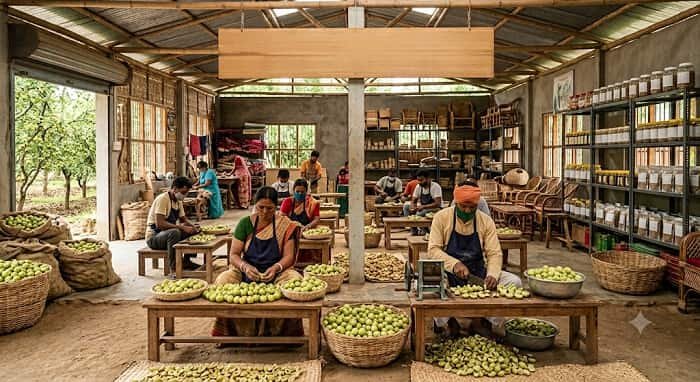
The state’s processing ecosystem also makes it special. In Pratapgarh, amla has been promoted under local product schemes, and even district jail inmates were trained to prepare 12 types of amla products such as murabba, candy, juice concentrate, laddoo, burfi and pickles. This shows how strongly amla is connected with the district’s food-processing identity.
Uttar Pradesh deserves the first position because it combines large cultivation, strong processing, old market identity and national recognition of Pratapgarh amla.
2. Madhya Pradesh
Madhya Pradesh ranks second among India’s top amla producing states.
The state has suitable dryland and semi-arid conditions for amla cultivation. Amla is grown in several parts of Madhya Pradesh as a hardy fruit crop because it can tolerate heat, limited water and relatively poor soil better than many other fruits. This makes it useful for farmers in areas where high-water fruit crops are risky.
Important amla-growing belts include Mandsaur, Neemuch, Ujjain, Dewas, Ratlam, Betul, Chhindwara, Sehore, Dhar and parts of the Malwa and Nimar regions. Farmers grow amla both as orchard crop and as part of mixed horticulture systems.
Madhya Pradesh’s strength is its land availability and fruit-processing potential. The state already has a strong medicinal-plant and horticulture base, and amla fits naturally into this pattern. Amla can be used by Ayurvedic companies, local processing units, juice makers and traders.
The state deserves second position because it has a wide cultivation base, suitable climate and good potential for processed amla products. With better grading, storage and processing centres, Madhya Pradesh can become even stronger in this crop.
3. Gujarat
Gujarat stands third among the highest amla producing states in India.
The state has strong dryland horticulture conditions, and amla is grown in selected regions where farmers prefer hardy fruit crops. Gujarat’s climate supports crops that can survive heat and lower water availability, and amla fits well in such conditions.
Major amla-growing areas include Banaskantha, Sabarkantha, Mehsana, Kutch, Anand, Vadodara, Panchmahal and parts of Saurashtra. Farmers grow amla for fresh sale as well as for processing into juice, candy, powder and herbal products.
Gujarat’s biggest advantage is its strong trading and processing culture. The state has good road connectivity, active agricultural markets and a large food-processing base. Amla grown in Gujarat can move quickly into herbal, nutraceutical and packaged food industries.
Gujarat deserves third position because it has suitable growing conditions, commercial farmers and strong market links. The state may not have the same emotional identity as Pratapgarh, but it plays an important role in India’s amla supply chain.
4. Rajasthan
Rajasthan ranks fourth among India’s leading amla producing states in 2026.
Amla is a good crop for Rajasthan because it can handle dry conditions better than many other fruit crops. In a state where water availability is always a serious farming issue, hardy fruit crops like amla offer farmers a practical option. Once the orchard is established, the crop can give income for many years with proper care.
Important amla-growing regions include Jaipur, Ajmer, Alwar, Bharatpur, Bhilwara, Chittorgarh, Udaipur, Dausa, Tonk and parts of Kota division. The crop is grown in both irrigated and semi-dry areas, especially where farmers are shifting towards horticulture.
Rajasthan’s amla economy is connected with fresh fruit markets, local processing and Ayurvedic use. Amla products such as candy, powder and murabba have steady demand, and this gives farmers a better market than selling only raw fruit.
Rajasthan deserves fourth position because the crop suits its climate, uses less water compared with many fruit crops and supports dryland horticulture. With more processing units and farmer-level grading, the state can improve its amla value chain further.
5. Tamil Nadu
Tamil Nadu completes the list of the top five amla producing states in India in 2026.
In Tamil Nadu, amla is commonly known as nellikai. It has a strong place in traditional food, Siddha medicine, Ayurveda, hair-care products and herbal preparations. The fruit is used in pickles, powders, tonics, oils and health products, which creates stable demand.
Amla cultivation is found in selected districts such as Salem, Dharmapuri, Dindigul, Tiruchirappalli, Madurai, Theni, Tirunelveli and parts of western Tamil Nadu. Farmers grow it in dry and semi-dry pockets where the crop can perform well with proper irrigation and orchard management.
Tamil Nadu’s advantage is processing and medicinal use. The state has a strong herbal-product industry, Siddha medicine tradition and food-processing base. This helps amla move beyond raw fruit into value-added products.
Tamil Nadu deserves fifth position because it combines cultivation, traditional usage and processing demand. Its production may be smaller than the northern and central states, but its market value and medicinal use keep it important in India’s amla economy.
Final Words
The top five amla producing states in India in 2026 are Uttar Pradesh, Madhya Pradesh, Gujarat, Rajasthan and Tamil Nadu. Uttar Pradesh leads through Pratapgarh’s famous amla belt, while the other states support India’s amla supply through dryland orchards, processing units and herbal-product demand.
Amla farming has a bright future because the fruit is linked with health, Ayurveda, food processing and farmer income. With better branding, storage and value addition, India’s amla economy can grow much stronger.