Gold has a special place in India, but India’s own gold mining production is very small compared with its demand. The country imports hundreds of tonnes of gold every year, while domestic mine output remains limited. That is why even small gold-mining projects in India become important for mineral security, industrial development and state revenue.
For this 2026 list, one important point must be clear: gold production in India is not like coal, iron ore or limestone, where many states produce in huge quantities. Regular gold mining is mainly concentrated in a few states. Karnataka remains the traditional leader, while Andhra Pradesh has newly entered the major gold-production map through the Jonnagiri project. Some other states have small production, reserves, auctioned blocks or near-future mining potential.
Now let’s check out the top 5 gold producing states in India in 2026.
1. Karnataka
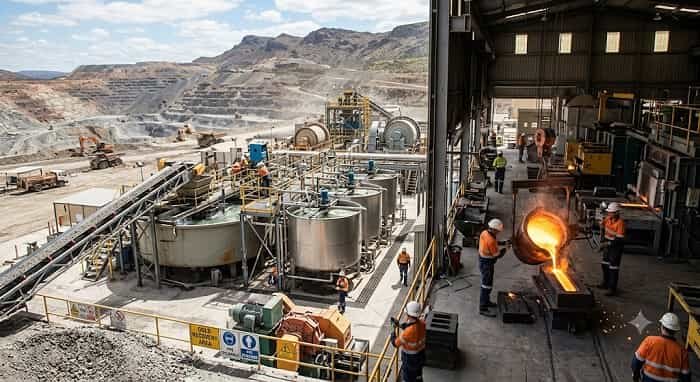
The state has India’s strongest and oldest gold-mining identity. Hutti Gold Mines in Raichur district is the main active gold-producing centre of the country. Karnataka’s gold mining history is also connected with Kolar Gold Fields, though KGF stopped production years ago. Today, Hutti remains the most important name in India’s domestic gold output.
Hutti Gold Mines Limited is owned by the Government of Karnataka and operates gold-mining and processing units in Hutti and Chitradurga. Its major mining areas include Hutti, Uti and Hirabuddini in Raichur district, along with gold-bearing belts in Chitradurga and nearby regions. The company’s mines are reported to produce around 3 tonnes of gold annually, making Karnataka the clear leader in Indian gold mining.
Karnataka’s advantage is that it has actual working mines, trained manpower, processing units and a long mining tradition. The state is not only rich in gold but also in iron ore, limestone, manganese, bauxite and other minerals.
Karnataka deserves the first position because it is the backbone of India’s gold production. Even after the closure of Kolar Gold Fields, Hutti has kept India’s domestic gold mining alive.
2. Andhra Pradesh
The biggest reason is the Jonnagiri Gold Project in Kurnool district. This project has made Andhra Pradesh one of the most important new gold-mining states in India. The Jonnagiri project is considered India’s first major private-sector gold mining project since independence and is expected to produce around 900 kg of gold annually after full commercial operation.
The project was launched in June 2026 with an investment of around ₹405 crore. It is located in the Kurnool region, which has long been known for gold-bearing geological formations. The mine is expected to create jobs, support local industry and reduce India’s complete dependence on imported gold, even if the quantity is still small compared with national demand.
Andhra Pradesh also has other gold-bearing zones in Rayalaseema and parts of southern Andhra. With better exploration, the state can become even more important in the coming years. Recent reports even suggested that Andhra Pradesh has the potential to become India’s leading gold producer in the future because of reserves found in Kurnool and nearby areas.
Andhra Pradesh deserves second position because it has moved from potential to actual commercial mining, making it one of India’s most exciting gold-production states in 2026.
3. Jharkhand
The state is already famous for coal, iron ore, copper, mica, uranium and other minerals. Gold is not its biggest mineral, but Jharkhand has important gold-bearing areas, especially in East Singhbhum and nearby mineral belts. Lava Gold Mines near Chandil and gold-bearing areas such as Parasi, Pahadia, Kunderkocha and Bhitar Dari are often mentioned in connection with Jharkhand’s gold resources.
Jharkhand’s strength is its mineral-rich geology. The state lies in the Chota Nagpur Plateau region, one of India’s most important mineral zones. Gold here is found along with other minerals in complex geological formations, so exploration and commercial extraction require proper technology and investment.
The state’s production is much smaller than Karnataka, but it remains important because it has active and potential gold-mining locations. Jharkhand also has strong mining infrastructure because of its coal, iron ore and copper industries.
Jharkhand deserves third position because it is one of the few Indian states connected with actual gold-mining activity and known gold-bearing blocks. With better exploration and investment, its gold sector can grow further.
4. Rajasthan
The state is already one of India’s strongest mineral states, famous for zinc, lead, silver, copper, limestone, marble, gypsum and sandstone. In recent years, Rajasthan has also gained attention for gold blocks in Banswara, Udaipur and nearby southern Rajasthan belts.
The most important gold project is the Bhukia-Jagpura gold block in Banswara district. It is considered a major gold-bearing block with about 113.52 million tonnes of gold ore, along with copper, nickel and cobalt resources. However, mining activity has been delayed because of legal and arbitration issues.
Rajasthan has also reopened auctions for gold mining blocks such as Kankriya Gara in Banswara and Dugocha in Udaipur/Salumber region. These blocks show that Rajasthan could become a serious gold producer in the coming years if exploration and mining permissions move smoothly.
Rajasthan deserves fourth position because it has strong gold reserves, active auction activity and major future potential. At present, its gold production is not as established as Karnataka or Andhra Pradesh, but its resource base is highly promising.
5. Uttar Pradesh
Uttar Pradesh completes the list of the top five gold producing and emerging gold-mining states in India in 2026. The state is not a major gold producer like Karnataka, but gold-bearing mineral blocks in the Sonbhadra region have kept Uttar Pradesh in the discussion. Sonbhadra is already an important mineral and energy district, known for coal, limestone, power plants and other resources.
In 2025, Uttar Pradesh auctioned major mineral blocks in Vindhyachal and Bundelkhand regions, including blocks connected with minerals such as iron ore, gold and glauconite in Sonbhadra. This shows that the state is trying to expand its mining economy and attract private investment into mineral exploration.
It is important to avoid confusion here. In 2020, there was a widely circulated claim about very large gold deposits in Sonbhadra, but the Geological Survey of India later clarified that no such huge 3,000-tonne discovery had been confirmed. So, Uttar Pradesh should be seen as an emerging gold-mining state, not a large established producer.
Uttar Pradesh deserves fifth position because of its gold-bearing blocks, mining auctions and future potential in Sonbhadra. Actual production is still limited, but the state has entered the gold-mining discussion through exploration and block allocation.
Final Words
The top five gold producing states in India in 2026 are Karnataka, Andhra Pradesh, Jharkhand, Rajasthan and Uttar Pradesh. Karnataka remains the clear leader, while Andhra Pradesh has become the most important new entrant through the Jonnagiri gold project.
India’s domestic gold production is still very small compared with its demand. Better exploration, faster clearances, responsible mining and modern processing can help states like Andhra Pradesh, Rajasthan, Jharkhand and Uttar Pradesh become more important in the future.