Wool is one of India’s oldest livestock-based natural fibres. It comes from sheep-rearing communities, mountain herders, desert pastoralists and rural households that depend on animals for income. From warm blankets and carpets to shawls, tweed, namda, felt, rugs and traditional woollen products, wool supports both village livelihoods and the textile economy.
India’s wool sector is different from milk or meat because it is concentrated in a few regions. Dry desert belts, cold Himalayan areas and pastoral sheep-rearing zones produce most of the country’s wool. For this 2026 list, the ranking is based on the latest available wool production pattern from Basic Animal Husbandry Statistics 2025. India’s wool production was estimated at 34.5 million kg in 2024–25, with Rajasthan, Jammu & Kashmir, Gujarat, Maharashtra and Himachal Pradesh together contributing about 86% of national output.
Now let’s check out the top 5 wool producing states in India in 2026.
1. Rajasthan
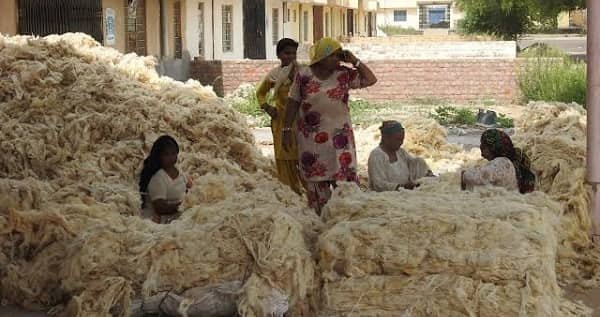
Rajasthan is the largest wool producing state in India in 2026.
The state is far ahead of every other region in wool production. In 2024–25, Rajasthan contributed around 47.8% of India’s total wool output, making it the clear leader of the country’s wool economy.
Rajasthan’s wool production is mainly linked with its sheep-rearing belts. Districts such as Bikaner, Jodhpur, Barmer, Jaisalmer, Nagaur, Pali, Churu, Jhunjhunu and Ajmer are important for sheep and wool. The dry climate of western Rajasthan supports pastoral livestock systems, where sheep are reared for wool, meat and livelihood security.
The state is known for breeds such as Marwari, Magra, Chokla, Nali and Sonadi. These breeds are suited to arid and semi-arid conditions. The wool is widely used in carpets, rugs, blankets and coarse woollen products. Bikaner and nearby regions also have a strong connection with wool trading and processing.
Rajasthan deserves the first position because it has the largest sheep base, old pastoral traditions, dryland suitability and a strong wool-market network. For many desert communities, wool is not only a product; it is part of their survival economy.
2. Jammu & Kashmir
Jammu & Kashmir ranks second among India’s top wool producing regions in 2026.
Although Jammu & Kashmir is now a Union Territory, it remains too important to ignore in India’s wool map. In 2024–25, it contributed about 23% of India’s total wool production, placing it just after Rajasthan.
The wool economy here is closely linked with Himalayan pastoral life. Sheep and goat rearing are common in districts such as Srinagar, Budgam, Anantnag, Baramulla, Ganderbal, Kupwara, Pulwama, Kulgam, Jammu, Rajouri, Poonch and parts of the higher mountain belts. Gujjar, Bakarwal and other pastoral communities play an important role in livestock movement and wool production.
Jammu & Kashmir is also famous for its fine woollen traditions. Pashmina, shawls, namda, gabba, blankets and other woollen crafts have given the region a special textile identity. The climate naturally supports warm clothing demand, which helps local woollen production and craft industries.
The region deserves the second position because it combines production volume, mountain sheep-rearing, fine wool identity and a strong craft-based wool economy.
3. Gujarat
Gujarat stands third among the highest wool producing states in India.
In 2024–25, Gujarat contributed around 6.2% of India’s wool production, keeping it firmly inside the top five.
Gujarat’s wool production is mainly connected with sheep-rearing communities in dry and semi-dry regions. Kutch, Banaskantha, Patan, Surendranagar, Jamnagar, Rajkot and parts of Saurashtra are important livestock belts. The state’s climate supports hardy sheep breeds that can survive in low-rainfall conditions.
The wool produced in Gujarat is mostly used for coarse woollen products, blankets, rugs and traditional textiles. Kutch also has a strong handicraft identity, where animal-based fibres, weaving traditions and rural craft skills are deeply connected.
Gujarat’s strength is its pastoral culture and trading network. The state has active rural markets, strong community-based livestock systems and good links with textile and craft sectors. It deserves third position because wool remains an important part of its dryland animal husbandry economy.
4. Maharashtra
Maharashtra ranks fourth among India’s wool producing states in 2026.
The state contributed around 4.7% of India’s wool output in 2024–25, placing it ahead of Himachal Pradesh.
Maharashtra’s wool production is mainly linked with the Deccan plateau and semi-arid sheep-rearing belts. Important regions include Solapur, Ahmednagar, Pune, Satara, Sangli, Beed, Osmanabad, Latur and parts of Vidarbha. Sheep are reared by pastoral and semi-pastoral communities, often along with goats and other livestock.
The Deccani sheep is one of the important breeds associated with this region. It is valued more for meat than fine wool, but wool still remains part of the livestock economy. The wool is generally coarse and used in blankets, rugs and local products.
Maharashtra’s position in the top five comes from its large dryland livestock base, sheep-rearing communities and wide semi-arid farming areas. Wool may not be as famous here as in Rajasthan or Kashmir, but it still contributes meaningfully to India’s total production.
5 . Himachal Pradesh
Himachal Pradesh completes the list of the top five wool producing states in India in 2026.
The state contributed around 4.3% of India’s wool production in 2024–25.
Himachal Pradesh has a strong hill-based wool tradition. Sheep and goats are reared in districts such as Kullu, Kinnaur, Chamba, Mandi, Kangra, Lahaul-Spiti and Shimla. The cold climate creates natural demand for woollen clothing, and many rural households are connected with sheep-rearing, spinning, weaving and woollen crafts.
The state is known for woollen products like shawls, caps, blankets, pattus and handwoven garments. Kullu shawls and other Himachali woollen items have strong cultural and market value. In high-altitude regions, wool is not only an income source but also a practical necessity for winter life.
Himachal Pradesh deserves fifth position because it has mountain sheep-rearing, traditional woollen weaving and strong local demand for wool-based products. Its production share is smaller than Rajasthan and Jammu & Kashmir, but its wool culture is very rich.
Final Words
The top five wool producing states and regions in India in 2026 are Rajasthan, Jammu & Kashmir, Gujarat, Maharashtra and Himachal Pradesh. Rajasthan is the clear leader, while Jammu & Kashmir adds strong Himalayan wool and craft value.
Wool production in India can grow stronger with better sheep breeds, organised shearing, clean wool collection, processing units and fair prices for pastoral communities.