Iron ore is the backbone mineral of India’s steel economy. Before it becomes steel bars, railway tracks, bridges, machines, vehicles, factory sheds or high-rise buildings, it begins as hard reddish-brown ore inside the mining belts of eastern, central and southern India. Trucks, conveyors and rail wagons move this mineral from mines to crushing plants, steel plants, pellet units and ports. In simple words, iron ore is one of the raw materials that keeps India’s construction and manufacturing engine alive.
The Ministry of Mines estimates India’s iron ore production at about 289.19 million tonnes in 2025–26. The same report says major iron ore producers include NMDC, SAIL, Odisha Mining Corporation, Tata Steel, Lloyds Metals, JSW and Rungta Sons. It also identifies Odisha, Chhattisgarh and Karnataka as the leading iron ore producing states for 2025–26.
Now let’s check out the top 5 iron producing states in India in 2026.
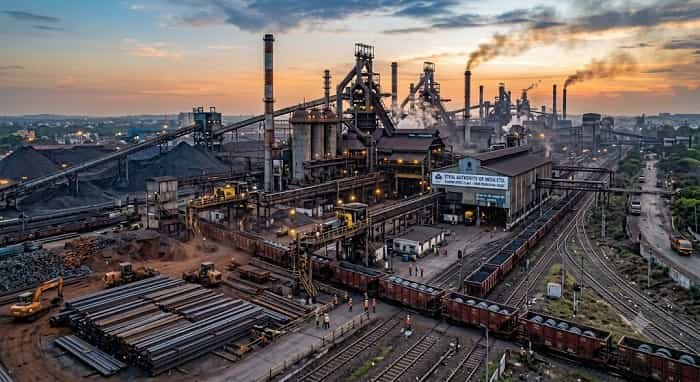
1. Odisha
Odisha is the largest iron ore producing state in India.
The state is far ahead of every other state in iron ore production. In the latest complete state-wise production scenario, Odisha accounted for 55.7% of India’s iron ore output in 2024–25. In the 2025–26 estimate also, Odisha remained the top iron ore producing state with a 50.28% share among major producers.
Odisha deserves the first position because it has some of India’s richest iron ore belts. Keonjhar, Sundargarh and Mayurbhanj are among the most important mining regions. The Joda-Barbil belt is especially famous for high-grade iron ore mining and strong mineral transport activity.
The state is also closely linked with India’s steel industry. Many steel plants and sponge iron units depend on Odisha’s iron ore. Companies such as Odisha Mining Corporation, Tata Steel, SAIL, JSW and Rungta Sons have strong relevance in the state’s iron ore economy.
Odisha’s advantage is not only mineral wealth. It also has ports, rail links, steel clusters and mining infrastructure. This makes the state the real centre of India’s iron ore production map.
2. Karnataka
Karnataka ranks second among the highest iron ore producing states in India.
In the latest complete state-wise production scenario, Karnataka accounted for 15.63% of India’s iron ore production in 2024–25. In the 2025–26 estimate, Karnataka’s share was reported at 16.55%, keeping it among the top three iron ore states.
Karnataka’s iron ore belt is mainly concentrated in Ballari, Chitradurga, Tumakuru and parts of the Sandur-Hospet region. Ballari-Hospet has long been one of India’s most important iron ore zones.
The state is important because of its strong mining and steel connection. Iron ore from Karnataka supports steel plants, pellet units, sponge iron units and other mineral-based industries. The presence of NMDC’s Donimalai and Kumaraswamy mining operations also adds to Karnataka’s importance.
Karnataka’s production has faced regulatory and environmental restrictions in the past, but it still remains one of India’s strongest iron ore states. Its high-quality ore, old mining belt and industrial demand keep it in the second position.
3. Chhattisgarh
Chhattisgarh stands third among India’s top iron ore producing states.
In 2024–25, Chhattisgarh accounted for 15.09% of India’s iron ore production. In the 2025–26 estimate, its share increased to 17.08%, placing it slightly ahead of Karnataka in the latest major-state estimate, though the broader ranking remains very close between the two.
The state’s iron ore identity is strongly linked with the Bailadila range in Dantewada and other mineral-rich areas. Bailadila is one of India’s most famous iron ore mining regions and is known for high-grade ore. NMDC’s Bacheli and Kirandul complexes have made Chhattisgarh a major supplier to the steel industry.
Chhattisgarh is also important because of its steel ecosystem. Bhilai Steel Plant is one of India’s most iconic steel plants, and the state has several sponge iron and steel units. Iron ore, coal and limestone together give Chhattisgarh a strong mineral-industrial base.
In 2026, Chhattisgarh remains one of India’s most strategic iron ore states because it combines resources, public-sector mining strength and steel production.
4. Jharkhand
Jharkhand ranks fourth among India’s highest iron ore producing states.
The latest complete state-wise production scenario gives Jharkhand a 6.62% share in India’s iron ore production for 2024–25.
Jharkhand has a long and historic connection with iron ore and steel. The state’s main iron ore belt is in West Singhbhum, especially around Noamundi, Gua, Kiriburu and Meghahatuburu. This region is part of the larger Singhbhum mineral belt, one of India’s richest iron ore zones.
Jharkhand is also important because of its link with Jamshedpur, Bokaro and other industrial centres. Tata Steel’s presence in Jamshedpur gave the state a permanent place in India’s steel history. Iron ore from Jharkhand has supported steel-making for more than a century.
Although Jharkhand’s current share is much smaller than Odisha, Karnataka and Chhattisgarh, its resource base and industrial legacy make it one of India’s most important iron ore states.
5. Maharashtra
Maharashtra completes the list of the top five iron ore producing states in India.
In the latest complete state-wise production scenario, Maharashtra accounted for 3.87% of India’s iron ore output in 2024–25. This puts it ahead of Madhya Pradesh, Andhra Pradesh and Goa in the official state-wise share list.
Maharashtra’s iron ore production is mainly linked with eastern Maharashtra, especially the Gadchiroli region. The Surjagarh iron ore belt has become increasingly important in recent years and has strengthened the state’s position in India’s iron ore map.
The state also has a strong industrial base. Maharashtra has steel, engineering, automobile, construction and manufacturing demand, which makes iron ore and steel supply strategically important. Even though the state does not match Odisha or Karnataka in scale, its production share has become large enough to place it in the top five.
Maharashtra’s future in iron ore will depend on responsible mining, forest clearances, transport infrastructure and stronger local value addition.
Why Iron Ore Matters for India
Iron ore is the main raw material for steel, and steel is essential for infrastructure, housing, railways, automobiles, machinery, defence and manufacturing. India is also a major global player in this sector. The Ministry of Mines notes that India ranked third in the world in iron ore production and second in crude steel production in 2023.
India is also self-sufficient or near self-sufficient in iron ore, which makes this mineral especially important for domestic steel security.
Final Words
The top five iron producing states in India in 2026 are Odisha, Karnataka, Chhattisgarh, Jharkhand and Maharashtra. Odisha is the clear leader and controls the biggest share of India’s iron ore production. Karnataka and Chhattisgarh form the next strong group, while Jharkhand carries historic steel and mining importance. Maharashtra completes the top five through its growing iron ore output.
Together, these five states form the foundation of India’s iron ore economy. Their mines supply the steel industry, support infrastructure growth and play a major role in India’s industrial future.