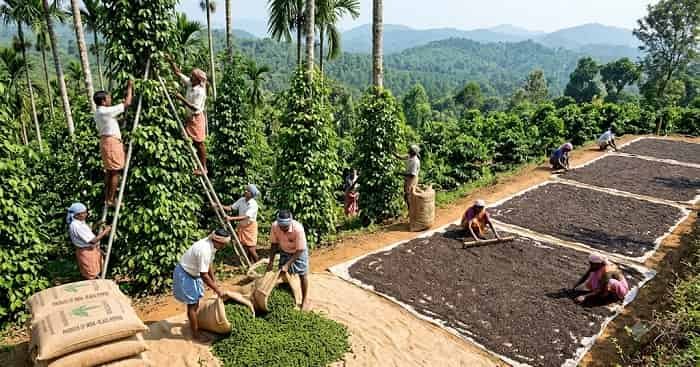
Black pepper is one of India’s most historic spices. It once brought foreign traders to the Malabar coast, and even today it remains a valuable crop for plantation farmers, spice exporters, food companies and local traders. The crop grows best in warm, humid regions, usually as a climbing vine on support trees in coffee, arecanut, coconut and mixed plantations.
The ranking is based on the latest major spice state-wise production estimate for 2025–26. India’s black pepper production is estimated at about 93,716 tonnes, with Karnataka far ahead, followed by Kerala, Assam, Meghalaya and Tamil Nadu. The pepper data from 2021–22 onward is based on DASD, Kozhikode estimates, as noted in the official spice production table.
Now let’s check out the top 5 black pepper producing states in India in 2026.
1. Karnataka
Karnataka is the largest black pepper producing state in India in 2026.
The state is far ahead of every other Indian state in black pepper output. For 2025–26, Karnataka’s black pepper production is estimated at around 63,387 tonnes, which gives it the biggest share in India’s pepper economy.
Karnataka’s pepper strength is mainly connected with the Western Ghats and coffee plantation belts. Kodagu is the most important pepper-growing district, followed by Chikkamagaluru, Hassan, Shivamogga, Dakshina Kannada and parts of Uttara Kannada. In many estates, pepper vines grow on shade trees inside coffee plantations, making it an important intercrop for planters.
Kodagu has become the real heart of Karnataka’s pepper story. The district is widely known for coffee, but pepper has become equally valuable for many growers. In 2026, pepper production in Kodagu was expected to rise by 16% compared with the previous year, while India’s pepper exports also showed 14.7% growth.
Karnataka deserves the first position because it combines high production, plantation-based cultivation, experienced growers, good quality pepper and strong links with domestic as well as export markets.
2. Kerala
Kerala ranks second among India’s top black pepper producing states.
The state has a legendary connection with pepper. For centuries, Kerala’s Malabar coast was known across the world for its spices, and black pepper was one of the most important trade items. Even today, Kerala remains one of India’s strongest pepper-growing regions, with estimated production of around 21,714 tonnes in 2025–26.
Major pepper-growing districts include Idukki, Wayanad, Kozhikode, Kannur, Kasaragod, Kottayam and parts of Pathanamthitta and Malappuram. The crop is grown in homesteads, mixed farms and plantation systems. In many areas, pepper is grown along with coconut, arecanut, coffee, rubber and other crops.
Kerala’s biggest strength is its brand value. Malabar pepper has a strong identity because of its old trade history, aroma and quality. The Malabar region, along with parts of western Tamil Nadu and southern Karnataka, is also associated with GI-recognised Malabar pepper.
However, Kerala’s pepper sector faces pressure from disease, climate change, labour cost, ageing vines and competition from other crops. Still, the state remains second because its pepper culture, quality reputation and spice-market network are very strong.
3. Assam
Assam stands third among India’s black pepper producing states in 2026.
Assam’s estimated black pepper production for 2025–26 is around 3,010 tonnes, placing it ahead of many traditional southern states in the latest production list.
Black pepper in Assam is grown mainly in homestead gardens, arecanut gardens and mixed farming systems. The crop suits the state’s humid climate and can be grown as a climbing vine on trees and support plants. It is not always cultivated in large plantations like Karnataka or Kerala, but its presence is strong in suitable pockets.
Major pepper-growing areas are found in districts such as Karbi Anglong, Dima Hasao, Golaghat, Jorhat, Sivasagar, Tinsukia, Dibrugarh and parts of lower Assam. Farmers often grow pepper along with arecanut, betel vine, ginger, turmeric, banana and other crops.
Assam’s importance is rising because the North East has good natural conditions for spices. With better planting material, training, drying, grading and market links, the state can improve both quality and income from pepper. Assam deserves third position because it has a growing production base and strong future potential in spice farming.
4. Meghalaya
Meghalaya ranks fourth among India’s leading black pepper producing states.
The state’s estimated black pepper output for 2025–26 is around 2,513 tonnes, keeping it inside the top five.
Meghalaya has a natural advantage for spices because of its high rainfall, hilly land, humid climate and traditional mixed farming systems. Black pepper is grown in selected regions along with arecanut, ginger, turmeric, bay leaf, betel leaf and other cash crops. Agriculture remains central to the state’s rural economy, and black pepper is listed among Meghalaya’s important cash crops.
Important pepper-growing belts are found in East Khasi Hills, West Khasi Hills, Ri-Bhoi, East Garo Hills, West Garo Hills and parts of Jaintia Hills. Many farmers grow pepper in small holdings rather than large commercial estates, but the crop gives good value when quality and drying are managed properly.
Meghalaya’s place in the top five comes from its favourable climate and spice-diversification potential. If the state strengthens processing, packaging and direct market access, black pepper can become a more profitable crop for hill farmers.
5. Tamil Nadu
Tamil Nadu completes the list of the top five black pepper producing states in India in 2026.
The state’s estimated black pepper production for 2025–26 is around 1,800 tonnes. It ranks below Karnataka, Kerala, Assam and Meghalaya in the latest production estimate, but it remains important because of its long association with Western Ghats spice farming.
Tamil Nadu’s pepper cultivation is mainly found in the hill and foothill belts of the Western Ghats. Important regions include the Nilgiris, Coimbatore, Dindigul, Theni, Kanyakumari, Tirunelveli and parts of Salem and Erode. In several areas, pepper is grown with coffee, coconut, arecanut and mixed orchard crops.
The state also has a connection with the Malabar pepper belt because western Tamil Nadu forms part of the wider pepper-growing region associated with Malabar pepper.
Tamil Nadu deserves a top-five place because of its suitable hill climate, spice-growing tradition and strong local demand. The production is smaller than the top two states, but the crop still has good value for farmers in the right locations.
Final Words
The top five black pepper producing states in India in 2026 are Karnataka, Kerala, Assam, Meghalaya and Tamil Nadu. Karnataka clearly leads the country, while Kerala remains the historic home of Indian pepper.
Black pepper will continue to be a valuable spice crop if farmers get better varieties, disease control, proper drying systems, fair prices and stronger export support.