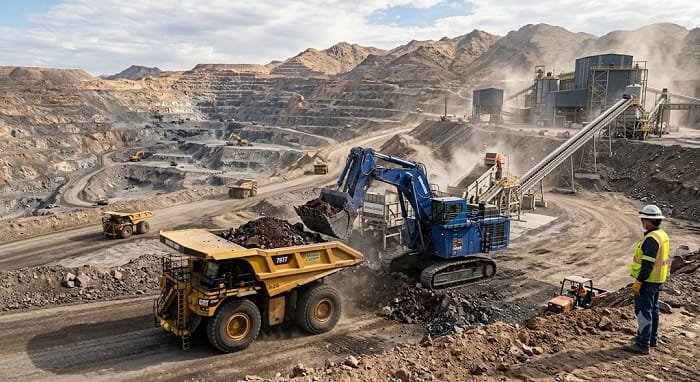
Mica is the mineral that shines quietly before it enters the world of machines, paints, cosmetics, electrical insulation, drilling fluids, and construction materials. It comes out of the earth in thin, glittering sheets, almost like nature has pressed silver paper between rocks. In India, mica has a long history. Once, the country was famous across the world for sheet mica, especially because Indian mica could be split into fine, flexible, heat-resistant layers.
For 2026, mica rankings need one important note. Mica was treated as a minor mineral from 2015, so producers reported data mainly to state departments, not directly to the Indian Bureau of Mines. The latest IBM mica review clearly says that only limited state data could be collected. In February 2025, mica was reclassified as a major mineral, which should improve reporting and monitoring in the coming years.
1. Rajasthan
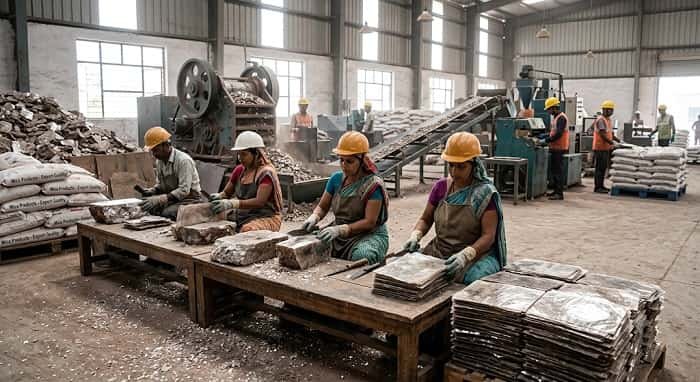
Rajasthan deserves the first place in the 2026 list because the latest available IBM state-wise production table shows it ahead among reporting states. In 2020-21, Rajasthan produced 17,719 tonnes of mica, slightly higher than Andhra Pradesh’s 16,717 tonnes.
The state has a long mica belt around Bhilwara, Ajmer, Jaipur, Tonk, and Udaipur regions. Bhilwara is especially important because many mica-bearing pegmatites and associated minerals are found around this belt. Rajasthan’s advantage is not only production but also its wider mining ecosystem. It already has strong mineral administration, mining leases, transport routes, and processing experience.
Rajasthan also has around 28% of India’s mica resources, according to IBM’s older resource data. This makes it one of India’s strongest mica states not only for current output but also for future mineral development.
2. Andhra Pradesh
Andhra Pradesh remains one of the most famous mica states in India. In many older records and examination-based references, it is often called the largest mica producer, mainly because of the Nellore mica belt. The latest IBM production table shows Andhra Pradesh at 16,717 tonnes in 2020-21, very close to Rajasthan.
The real strength of Andhra Pradesh lies in its resource base. IBM data says the state leads India’s mica resources with about 41% share. Nellore has been the heart of the state’s mica industry for decades. The SPSR Nellore district mining page also shows existing leases involving mica, quartz, feldspar, vermiculite, and garnet, along with several quartz-feldspar-mica lease categories.
Gudur, Sydapuram, Atmakur and nearby mica-bearing zones have helped Andhra Pradesh build a strong reputation in crude mica and sheet mica. Even if Rajasthan is ahead in the latest reported figure, Andhra Pradesh remains India’s most iconic mica state.
3. Jharkhand
Jharkhand is not just another mica state; it is emotionally and historically linked with India’s mica identity. Koderma was once known as the Mica Capital of India or Abrakh-Nagri. The official Koderma district page says the region was famous for world-class mica and had numerous mica mining leases spread across thousands of acres, although many mines were later closed after forest-related restrictions.
This is why Jharkhand’s mica story is different from Rajasthan or Andhra Pradesh. Its formal mining output may not appear strongly in recent official tables, but its old mining belt, processing network, labour history, and market memory keep it highly important. Koderma, Giridih, Domchanch and nearby areas still remain strongly associated with mica collection and processing.
For 2026, Jharkhand stands as a major traditional mica state. Its future depends on legal, sustainable, and transparent revival of mica-linked activity.
4. Odisha
Odisha takes an important place because of its mica resource strength. IBM data places Odisha with around 17% of India’s mica resources, after Andhra Pradesh and Rajasthan.
Odisha is already one of India’s strongest mineral states, known for iron ore, bauxite, chromite, manganese, coal, limestone, and other minerals. Mica is not its biggest mining identity, but the state has a solid geological base. Its mica-bearing zones are part of a wider mineral-rich landscape.
The state’s advantage is future potential. As mica is now a major mineral, Odisha may benefit from better exploration, clearer reporting, and more systematic mineral development. If demand rises from electrical, cosmetic, paint, drilling, and industrial uses, Odisha can become a more visible mica contributor.
5. Maharashtra
Maharashtra is another important mica-bearing state, supported by its resource base. IBM data gives Maharashtra around 13% of India’s mica resources, placing it among the top mica-resource states in the country.
The state is better known for minerals like coal, manganese, limestone, bauxite, and iron ore in different belts, but mica-bearing pegmatites also exist. Maharashtra’s importance comes from its combination of resources, industrial demand, and location. It is close to large manufacturing markets, chemical industries, construction material industries, and ports.
In 2026, Maharashtra may not be as famous as Andhra Pradesh, Rajasthan, or Jharkhand in the public mind, but it deserves a place in the top five because its mica resources are significant and can support future production if proper exploration and commercial mining expand.
Why Mica Matters for India
Mica is valued because it can split into extremely thin sheets and still remain flexible, tough, heat-resistant, chemically stable, and electrically insulating. IBM describes mica as useful in electrical and electronic industries, micanite products, capacitors, commutator segments, construction materials, paints, rubber, plastics, cosmetics, and drilling fluids.
This wide usage makes mica more than a shiny mineral. It is an industrial raw material with importance in both traditional and modern sectors.
Final Words
The top mica states in India for 2026 are Rajasthan, Andhra Pradesh, Jharkhand, Odisha, and Maharashtra. Rajasthan and Andhra Pradesh lead in the latest available reported production, while Jharkhand remains the historic mica heartland. Odisha and Maharashtra are important because of their strong mica resource base. With mica now brought under the major mineral category, India’s mica sector may become more transparent, better regulated, and more valuable in the coming years.