Chilli is one of the most powerful spices in Indian agriculture. It gives colour, heat, aroma and value to food, but for farmers it is also a high-risk, high-reward crop. A good chilli season can bring strong income, while pest attack, untimely rain, excess acreage or weak export demand can quickly disturb prices.
India grows both green and dry red chilli, but the main commercial value comes from dry chilli used in masala powders, pickles, food processing, oleoresin extraction and exports. For this 2026 list, the ranking is based on the latest major spice state-wise production estimates for 2025–26, where India’s total chilli production is estimated at about 24.64 lakh tonnes.
Now let’s check out the top 5 chilli producing states in India in 2026.
1. Andhra Pradesh
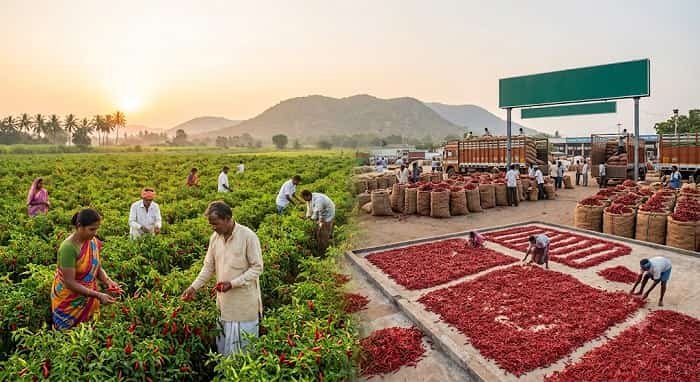
Andhra Pradesh is the largest chilli producing state in India in 2026.
The state is far ahead of all others in dry chilli production. In the 2025–26 estimate, Andhra Pradesh’s chilli production is placed at around 11.67 lakh tonnes, making it the clear leader in India’s chilli economy.
The real heart of Andhra Pradesh’s chilli belt is Guntur. Guntur, Palnadu, Prakasam, Kurnool, Nandyal, Krishna, Anantapur and parts of Rayalaseema are important chilli-growing regions. Guntur Mirchi Yard is one of India’s most famous chilli trading centres, and prices from this market often influence chilli trade in many parts of the country.
Andhra Pradesh is known for varieties such as Teja, 341, Guntur Sannam and other commercial red chillies. These varieties are valued for colour, pungency, flavour and export use. Recent market reports also noted that the locally grown 341 chilli variety gained strong demand in Guntur because of its colour, moderate pungency and suitability for domestic masala makers.
The state deserves the first position because it combines huge production, famous chilli varieties, strong mandis, processing units, export links and deep farmer experience. Chilli is not just another spice crop in Andhra Pradesh; it is one of the main pillars of its horticulture economy.
2. Telangana
Telangana ranks second among India’s top chilli producing states in 2026.
The state’s chilli production for 2025–26 is estimated at around 3.56 lakh tonnes, placing it after Andhra Pradesh in the national ranking.
Telangana has a strong chilli belt in districts such as Khammam, Warangal, Mahabubabad, Jangaon, Jayashankar Bhupalpally, Nalgonda, Suryapet, Adilabad and parts of Karimnagar. Khammam and Warangal are especially important because they have long been connected with dry red chilli cultivation and trade.
Telangana’s chilli economy is closely linked with both domestic markets and Andhra Pradesh’s Guntur trade. Some famous chilli varieties are grown across both Andhra and Telangana belts. Guntur Sannam chilli, for example, is associated with Guntur and Prakasam in Andhra Pradesh as well as Warangal and Khammam in Telangana.
The state deserves second position because of its large chilli area, strong farmer base and active dry chilli markets. However, like Andhra Pradesh, Telangana farmers also face price swings, pest pressure and weather risk.
3. Madhya Pradesh
Madhya Pradesh stands third among the highest chilli producing states in India in 2026.
The state’s chilli production is estimated at about 2.98 lakh tonnes in 2025–26, keeping it firmly inside India’s top three chilli-producing states.
Madhya Pradesh has grown strongly in spice production over the years. Chilli is cultivated in several districts, especially in western and central belts. Important growing regions include Khargone, Khandwa, Dhar, Barwani, Burhanpur, Indore, Dewas, Chhindwara and parts of the Nimar and Malwa regions.
The state’s advantage is its large agricultural land, improving irrigation and strong mandi connectivity. Madhya Pradesh is already a major producer of several spices such as garlic, coriander and ginger, so chilli fits well into its commercial spice economy.
Madhya Pradesh deserves third position because it has large production, good market access and strong potential for processing. Its chilli may not have the same national branding as Guntur or Byadagi, but the state has become a major contributor to India’s total chilli output.
4 Karnataka
Karnataka ranks fourth among India’s leading chilli producing states.
The state’s 2025–26 chilli production is estimated at around 2.21 lakh tonnes. Karnataka has a rich chilli identity, especially because of Byadagi chilli, one of India’s most famous chilli varieties.
Major chilli-growing districts include Haveri, Dharwad, Gadag, Ballari, Raichur, Bagalkot, Vijayapura, Koppal and Belagavi. Byadagi in Haveri district is especially famous for deep red colour chilli, which is widely used in spice powders and oleoresin extraction.
Byadagi chilli is GI-tagged and known for its colour value rather than extreme pungency. It is widely used in South Indian food, masala industries and colour extraction.
Karnataka’s dry red chilli sector faced a production drop in 2024–25, with output falling to about 1.58 lakh metric tonnes from 3.2 lakh tonnes in the previous season, which pushed prices sharply higher. Still, Karnataka remains one of India’s most important chilli states because of its famous varieties and strong trading centres.
5. Odisha
Odisha completes the list of the top five chilli producing states in India in 2026.
The state’s chilli production for 2025–26 is estimated at around 89,000 tonnes, placing it fifth in the latest major spice state-wise estimate.
Chilli is grown in many parts of Odisha as a commercial spice and vegetable crop. Important producing regions include Ganjam, Koraput, Rayagada, Kalahandi, Balangir, Kandhamal, Bargarh, Nuapada and parts of coastal and western Odisha. The crop is useful for small and marginal farmers because it gives better value than many ordinary field crops when prices are good.
Odisha’s chilli production is not as large as Andhra Pradesh or Telangana, but it has a strong place in local food culture and regional markets. Dry chilli, green chilli and chilli powder are widely used in Odia cuisine and local trade.
Odisha deserves fifth position because it has a steady chilli cultivation base, suitable pockets for spice farming and growing importance in India’s broader chilli production map.
Final Words
The top five chilli producing states in India in 2026 are Andhra Pradesh, Telangana, Madhya Pradesh, Karnataka and Odisha. Andhra Pradesh clearly leads the country, while Telangana and Madhya Pradesh form the next strong group.
Chilli farming will remain profitable only when farmers get better seed varieties, pest control, drying support, storage, processing units and fair market prices.