Diamonds have a special place in India’s mining history. Long before South Africa, Russia or Australia became famous for diamonds, India was known across the world for legendary stones, royal gems and old river-bed mines. But the present situation is very different from the past. Diamond production in India is now extremely limited, and it is not spread across many states like coal, iron ore or limestone.
If we talk about actual current diamond production, Madhya Pradesh is the clear and only major producing state because of the Panna diamond belt. Recent reports also describe Panna as India’s only operational diamond-producing region. Other states in this list are included because of their diamond resources, exploration projects, historical diamond belts or future production potential — not because they currently produce diamonds on a large commercial scale.
Now let’s check out the top 5 diamond producing and diamond-resource states in India in 2026.
1. Madhya Pradesh
Madhya Pradesh is the largest and most important diamond producing state in India in 2026.
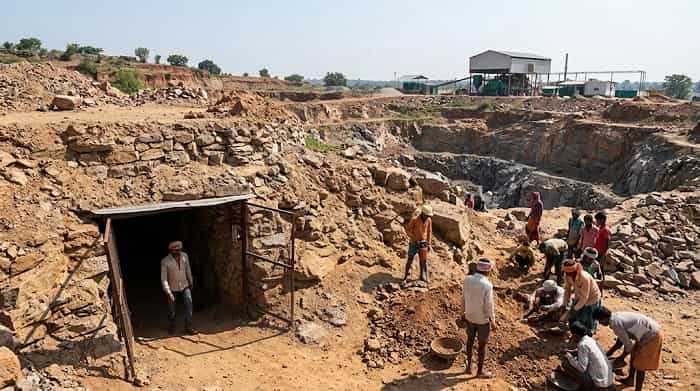
The state’s diamond identity is built around the Panna district. Panna is not just a name in India’s mineral map; it is the heart of India’s present-day natural diamond production. The famous Majhgawan diamond mine near Panna is operated by NMDC and is known as the only mechanised diamond mine in the country. Mining activity here had faced a halt due to environmental concerns, but operations were allowed to resume under conditions, and NMDC was expected to extract around 6,500 carats from the mine in the relevant fiscal year.
Panna also has smaller leased mining plots where local miners dig, wash and sieve soil in search of diamonds. When diamonds are found, they are deposited at the diamond office and later auctioned through the official process. This system gives Panna a very different mining culture compared with large mechanised mineral mines.
Madhya Pradesh’s position became even stronger after Panna Diamonds received a GI tag. This gives the diamonds a certified regional identity and helps promote them as a recognised natural product from Panna.
The state deserves the first position because it is the only real active diamond-producing centre of India today. Panna’s mines, auctions, local miners and NMDC operations make Madhya Pradesh the undisputed diamond state of India.
2. Chhattisgarh
Chhattisgarh ranks second in this list because it is the strongest future diamond-production candidate after Madhya Pradesh.
The state is not yet a regular diamond producer like Panna, but its Baloda-Belmundi diamond block in Mahasamund district has become very important. In 2026, NMDC-CMDC Limited approved the next phase of exploration at this block, including large-diameter drilling to check the commercial viability of the deposit. If the project moves successfully from exploration to mining, Chhattisgarh could become India’s next diamond-producing state.
Chhattisgarh already has a strong mining identity because of coal, iron ore, bauxite and other minerals. Diamond exploration adds a new layer to its mineral economy. The Baloda-Belmundi block is important because India has very few active diamond locations, so even one commercially viable project can change the national diamond-production map.
Chhattisgarh deserves the second position not because it is producing diamonds at Panna’s level today, but because it is the most serious upcoming diamond state in India in 2026.
3. Andhra Pradesh
Andhra Pradesh holds an important place in India’s diamond story because of its historic Golconda-Krishna river diamond belt.
Many of the world’s most famous old Indian diamonds are linked with the Krishna-Godavari region and the historic Golconda diamond trade. The Kollur mine, located near the Krishna River region, was one of the most famous old diamond mines of the Indian subcontinent. It operated for centuries and is associated with legendary diamonds from India’s past.
In 2026, Andhra Pradesh is not a major current diamond-producing state. Its importance is mainly historical and geological. The old diamond-bearing belts of the Krishna and Penna river systems gave India global fame in earlier centuries, but those mines are no longer active in the same way.
Still, Andhra Pradesh deserves a place in this list because no serious article on Indian diamonds can ignore its past. The state’s diamond history is connected with ancient mining, alluvial deposits, royal trade and some of the most famous gemstones ever linked with India.
4. Telangana
Telangana is another historically important diamond-linked state because of the Golconda connection.
Golconda, near modern Hyderabad, became one of the world’s most famous diamond trading and cutting centres. The term “Golconda diamond” became associated with rare, high-quality diamonds. Many diamonds that were mined from the wider Krishna-Godavari belt passed through Golconda’s trade networks, giving the region a powerful place in gemstone history.
Telangana’s importance is more about trade history and geological potential than present production. The region was part of the old Deccan diamond world, where river systems, old mines, traders and royal courts created a diamond economy that became famous far outside India.
Today, Telangana is not counted as a major natural diamond-producing state. But because of its Golconda legacy and its connection with the old diamond trade, it remains one of the most important diamond-linked regions in India.
5. Karnataka
Karnataka completes the list because of its link with the southern Indian kimberlite belt and geological diamond potential.
Karnataka is not a major present-day diamond producer, but parts of southern India contain kimberlite and lamproite formations that are important in diamond exploration. The Central Raichur kimberlite cluster is one of the geological names connected with India’s southern diamond-bearing formations.
The state’s mining identity is already strong through minerals like iron ore, gold and other resources. While diamond mining has not become commercially important like in Madhya Pradesh, Karnataka’s geological setting keeps it relevant in discussions on India’s diamond-resource potential.
Karnataka’s position in this list is based on geology and exploration relevance, not current large-scale diamond production. It is included because India’s diamond story is not only about present mining, but also about old formations, future possibilities and unexplored mineral potential.
Final Words
The top diamond producing state in India in 2026 is clearly Madhya Pradesh, with Panna as the real centre of production. Chhattisgarh is the most important future candidate, while Andhra Pradesh, Telangana and Karnataka carry historical and geological importance.
India’s diamond production may be small today, but its diamond legacy remains one of the richest in the world, and future exploration could again bring new shine to the country’s gemstone map.