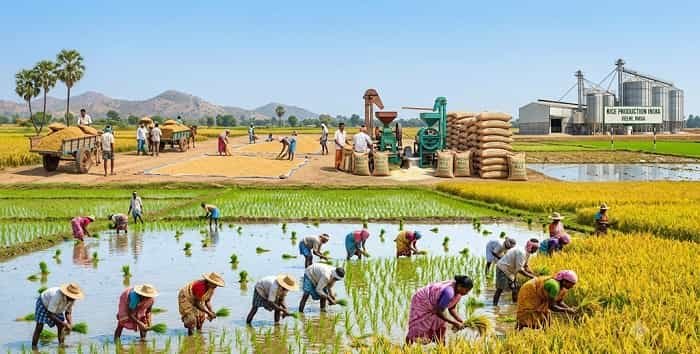
Education is one of the biggest measures of real development. A state may have industries, cities, roads and resources, but if a large section of people cannot read, write or understand basic information, development remains incomplete. Literacy affects jobs, health awareness, banking, digital services, women’s empowerment, government schemes and overall quality of life.
The ranking is based on the latest available PLFS/NSS-linked literacy and illiteracy reporting. India’s overall literacy rate for people aged seven and above was reported at 80.9%, but several states still remain below the national average.
Now let’s check out the top 5 most uneducated states in India in 2026.
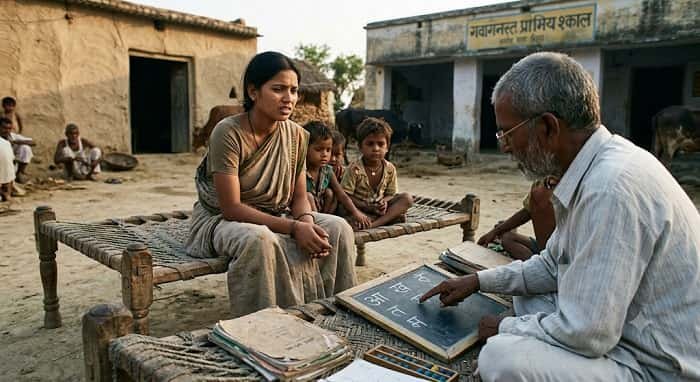
1. Andhra Pradesh
The state has the highest reported illiteracy rate among Indian states. Recent PLFS-based reporting placed Andhra Pradesh’s illiteracy rate at around 24.5%, which means nearly one-fourth of the population above the measured age group still lacks basic literacy.
This position may look surprising because Andhra Pradesh has big cities, industries, ports, education hubs and a growing service economy. But literacy depends on more than urban development. Rural education, adult learning, female literacy, school retention and learning quality all play a major role.
The state’s challenge is mainly in bringing weaker sections, rural adults, women and school dropouts into the literacy net. Many children may enter school, but regular attendance and real learning outcomes still need improvement in several areas.
Andhra Pradesh needs stronger focus on adult literacy, foundational learning, digital literacy and government school quality. If the state improves early-grade reading and supports adult learners, it can reduce this gap in the coming years.
2. Bihar
The state’s illiteracy rate is reported at around 23%, placing it just after Andhra Pradesh in the high-illiteracy group. Bihar has historically struggled with low literacy because of poverty, high population pressure, rural dependence, school dropout and uneven access to quality education.
The state has made progress compared with earlier decades, but the gap is still large. Many districts continue to face problems such as weak school infrastructure, teacher shortage, low female literacy and migration-related disruption in education.
Bihar’s education challenge is also linked with family income. In poor households, children may leave school early or may not get enough support for regular study. Girls’ education also needs continuous support, especially at secondary and higher-secondary levels.
Bihar deserves attention because education can change the state’s future more than almost any other sector. Better schools, trained teachers, girls’ hostels, scholarships, digital learning and skill-based education can make a big difference.
3. Jharkhand
The state’s illiteracy rate is reported at around 20.5%, which keeps it among India’s biggest literacy-concern states. Jharkhand’s educational challenges are closely connected with tribal regions, forest villages, mining belts, rural poverty and difficult access to quality schools.
Many children in remote areas are first-generation learners. This means their parents may not have received formal education, so the child often does not get enough academic support at home. Language difference is another challenge in tribal areas, where children may speak local languages at home but study in Hindi or another school language.
The state also needs stronger focus on girls’ education, school attendance and learning quality. In several rural and tribal pockets, distance from school and household income pressure can affect regular education.
Jharkhand has strong potential because of its young population. If education improves in tribal and backward districts, the state can create better employment opportunities and reduce long-term poverty.
4. Madhya Pradesh
The state’s illiteracy rate is reported at around 19.6%, keeping it below better-performing states. Madhya Pradesh is geographically large, and its education challenges are spread across rural, tribal, forest and semi-urban regions.
The state has many districts where government schools are the main source of education. In such areas, teacher availability, classroom quality, internet access, language support and regular attendance become very important. A 2024–25 UDISE+ linked report also noted weak internet access in Madhya Pradesh government schools, with only about 35.3% having internet facilities.
Madhya Pradesh’s literacy problem is not only about enrolment. The bigger issue is whether children can read properly, write clearly and understand basic mathematics at the right age. Foundational learning is the base of all future education.
The state can improve faster if it focuses on early-grade learning, teacher training, tribal-area education, school infrastructure and adult literacy programmes.
5. Telangana
The state’s illiteracy rate is reported at around 17.9%, placing it fifth in the high-illiteracy ranking. This may surprise many people because Telangana has Hyderabad, one of India’s strongest IT and education cities. But a state’s literacy rate includes both urban and rural populations.
Telangana’s urban centres are strong, but rural and backward areas still need improvement in adult literacy, school continuation and learning quality. Some communities may have benefited less from the state’s rapid economic growth, especially where poverty, migration and social disadvantage remain present.
The state’s main challenge is the gap between advanced urban development and weaker educational outcomes in some rural or semi-rural belts. Hyderabad’s success alone cannot represent the whole state.
Telangana can improve its position by expanding adult literacy, strengthening government schools, improving girls’ education and making digital learning more accessible outside major cities.
Final Words
The top five most uneducated states in India in 2026 are Andhra Pradesh, Bihar, Jharkhand, Madhya Pradesh and Telangana. These states need stronger focus on basic literacy, school quality, adult education and girls’ education.
Education is not only about reading and writing; it gives people confidence, awareness, dignity and better opportunities. With strong local action, these states can improve their literacy position in the coming years.