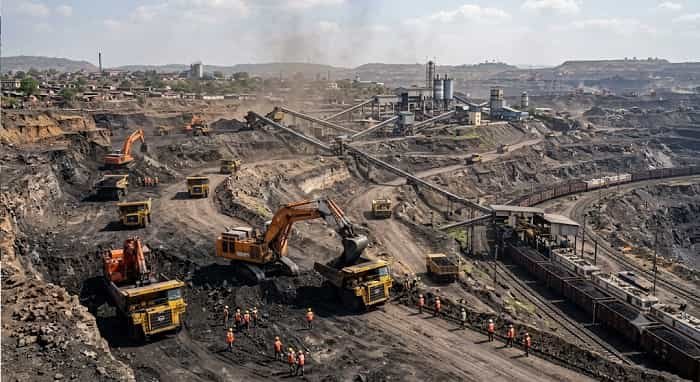
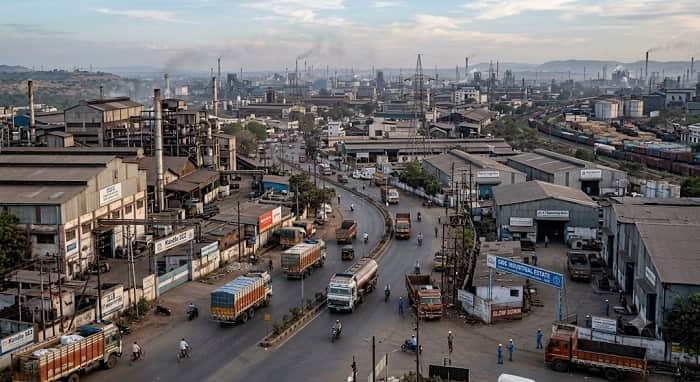
Electricity is the silent engine behind India’s economy. Every factory, metro line, data centre, farm pump, hospital, railway network and home depends on it. In 2026, India’s power map is no longer only about coal plants. The country now has a much wider mix of thermal power, solar, wind, hydro, gas and nuclear energy.
For this list, the ranking is based on installed power generation capacity, because it is the clearest state-wise measure available for 2026. Actual electricity generation in units can change every month depending on coal supply, demand, rainfall, plant load factor and renewable output. As of 31 March 2026, India’s total installed power capacity stood at about 532,739 MW, according to the National Power Portal/CEA data.
Now let’s check out the top 5 electricity producing states in India in 2026.
1. Gujarat
Gujarat is the largest electricity producing state in India in 2026 by installed power generation capacity. The state has around 71,690 MW of total installed power capacity, making it India’s strongest power-capacity state.
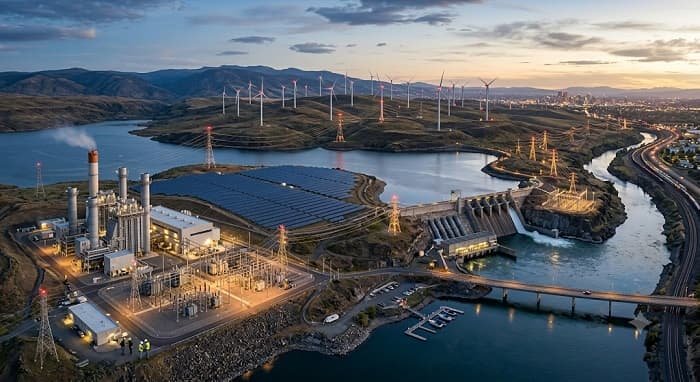
Gujarat’s biggest strength is its balanced energy mix. The state has a powerful base of thermal power, especially coal, lignite and gas-based plants. At the same time, it has become one of India’s biggest renewable energy centres. Gujarat’s solar capacity is above 29,300 MW, while its wind capacity is more than 15,600 MW, giving it a huge clean-energy advantage.
The state’s industrial economy also supports its electricity growth. Cities and industrial belts like Ahmedabad, Surat, Vadodara, Jamnagar, Bharuch, Rajkot, Kutch and Mundra need heavy power supply for refineries, chemicals, textiles, ports, engineering, ceramics and manufacturing. Gujarat also benefits from coastal infrastructure, private investment and large renewable energy parks.
Gujarat deserves the first position because it has both conventional power strength and one of India’s fastest-growing renewable energy bases.
2. Rajasthan
Rajasthan ranks second among the top electricity producing states in India in 2026. The state has around 60,647 MW of installed power generation capacity.
Rajasthan’s rise is mainly powered by solar energy. The state has vast desert land, high solar radiation and large open areas, which make it perfect for mega solar parks. Its solar power capacity crossed 41,000 MW by March 2026, the highest among Indian states. It also has more than 5,300 MW of wind power capacity.
The state is famous for solar belts in Jaisalmer, Bikaner, Barmer and Jodhpur. Bhadla Solar Park has already made Rajasthan a global name in solar power. Along with solar, the state also has thermal power plants and some hydro capacity, but renewables are now the real identity of Rajasthan’s power sector.
Rajasthan deserves second place because it has turned its dry desert geography into a clean-energy advantage. In India’s future energy planning, Rajasthan will remain one of the most important states.
3. Maharashtra
Maharashtra stands third with around 59,516 MW of installed power generation capacity in 2026.
The state has one of the biggest electricity demands in India because of Mumbai, Pune, Nagpur, Nashik, Aurangabad/Chhatrapati Sambhajinagar and many industrial regions. Maharashtra’s power mix includes coal-based thermal plants, gas-based plants, nuclear power, hydro power, solar, wind and biomass.
Maharashtra has strong renewable growth too. Its solar capacity is around 19,622 MW, wind capacity is around 5,927 MW, and total renewable plus large hydro capacity is above 31,980 MW.
The state’s power sector supports finance, IT, manufacturing, ports, railways, metro projects, agriculture and large urban consumption. Thermal power still plays an important role, but solar and wind are growing quickly, especially because industries want cleaner and more cost-effective electricity.
Maharashtra deserves third position because it combines massive demand, large power plants, strong transmission needs and a fast-expanding renewable energy ecosystem.
4. Tamil Nadu
Tamil Nadu is the fourth-largest electricity producing state in India in 2026, with around 47,637 MW of installed power generation capacity.
Tamil Nadu has been a renewable energy leader for many years. Earlier, it was best known for wind energy, especially in regions like Tirunelveli, Thoothukudi, Coimbatore and Kanyakumari belts. In 2026, the state continues to remain one of India’s strongest wind power states, with more than 12,147 MW of wind capacity. Its solar capacity is also strong at around 13,580 MW.
The state also has thermal power, nuclear power and hydro power. This gives Tamil Nadu a diversified power base. Chennai, Coimbatore, Hosur, Tiruppur, Salem and other industrial cities need reliable electricity for automobiles, textiles, electronics, IT, manufacturing and exports.
Tamil Nadu deserves fourth position because it has built a mature electricity system over many decades. Its power sector is not dependent on one source only; it has thermal, nuclear, wind, solar and hydro working together.
5. Uttar Pradesh
Uttar Pradesh completes the list of the top five electricity producing states in India in 2026. The state has around 38,953 MW of installed power generation capacity.
UP’s electricity demand is huge because it is India’s most populous state. The state needs power for homes, agriculture, small businesses, industries, railways, metros, expressways and fast-growing cities like Lucknow, Kanpur, Noida, Ghaziabad, Varanasi, Prayagraj, Gorakhpur, Agra and Meerut.
The state’s power base is still strongly thermal. Uttar Pradesh has more than 31,500 MW of thermal capacity, supported mainly by coal and gas-based generation. It also has nuclear capacity and growing renewable power. Its solar capacity is above 4,100 MW, while biomass and bagasse-based power are also important because of the state’s sugarcane belt.
Uttar Pradesh deserves fifth position because of its massive electricity demand, strong thermal base and rising solar and bio-power capacity. As industrial corridors and urban growth expand, the state’s role in India’s power sector will become even bigger.
Final Ranking
India’s electricity sector is changing quickly. Gujarat and Maharashtra show industrial power strength, Rajasthan shows the rise of solar energy, Tamil Nadu proves the value of a diversified renewable base, and Uttar Pradesh reflects the power needs of a huge population and growing economy. Together, these five states form the backbone of India’s electricity production capacity in 2026.