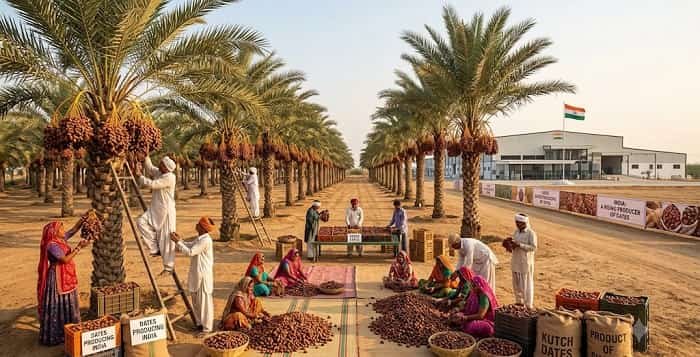
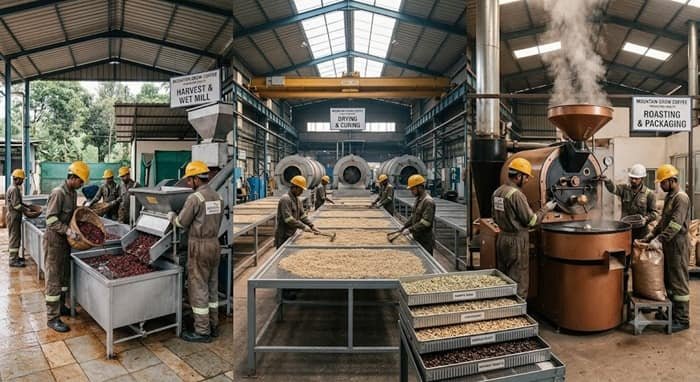
India’s industrial map looks like a giant machine where every state plays a different part. Some states run on automobiles and electronics, some on chemicals and ports, some on textiles and machinery, while others are growing fast through defence corridors, food processing, data centres and new factories. In 2026, India’s industrial strength is no longer limited to old factory belts. It is now a mix of manufacturing, exports, infrastructure, skilled labour, logistics, technology and investment.
For this list, the ranking is based on overall industrial strength, including manufacturing base, number of factories, industrial employment, export readiness, major industrial clusters, investment flow and diversity of sectors. According to the Annual Survey of Industries 2023–24, Tamil Nadu, Gujarat, Maharashtra, Uttar Pradesh and Karnataka are among the leading states in factory base and industrial employment, showing where India’s industrial power is concentrated.
Now let’s check out the top 5 most industrial states in India in 2026.
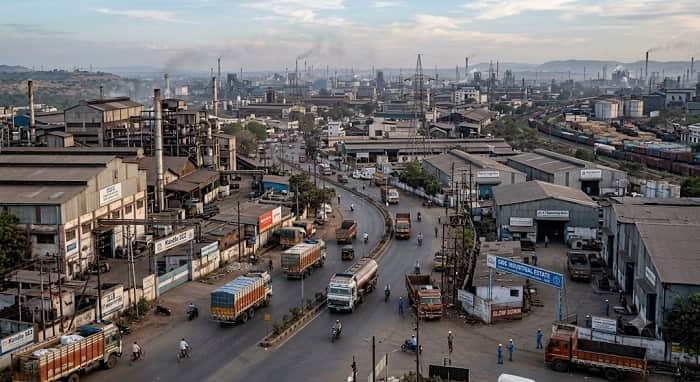
1. Maharashtra
Maharashtra is the most industrial state in India in 2026.
The state has India’s largest economy and one of the deepest industrial ecosystems. Mumbai is the financial capital of India, Pune is a major automobile and IT hub, Nashik is known for engineering and manufacturing, Nagpur is rising as a logistics and industrial centre, and Aurangabad/Chhatrapati Sambhajinagar has strong automobile, pharma and manufacturing activity.
Maharashtra’s industrial strength comes from its balance. It is not dependent on one sector only. The state is strong in automobiles, engineering, chemicals, pharmaceuticals, textiles, petroleum, electronics, food processing, IT services, media, logistics and financial services. This wide industrial base gives Maharashtra a very strong position in India’s economy.
The state also ranked first among large states in NITI Aayog’s Export Preparedness Index 2024, ahead of Tamil Nadu and Gujarat. This shows that Maharashtra is not only producing goods and services, but also building a strong export ecosystem through policy, infrastructure, business environment and market access.
Maharashtra deserves the first position because it has scale, diversity, ports, finance, skilled manpower, industrial cities and strong domestic as well as export-oriented industries.
2. Gujarat
Gujarat ranks second among the most industrial states in India in 2026.
If India has one state that looks like a factory corridor from coast to inland cities, it is Gujarat. The state is famous for chemicals, petrochemicals, petroleum refining, pharmaceuticals, textiles, engineering, ceramics, cement, gems and jewellery, ports, automobiles and renewable energy equipment.
Gujarat’s biggest strength is its industrial depth. Jamnagar is known globally for petroleum refining. Vadodara and Ankleshwar are important chemical and pharma centres. Ahmedabad and Surat are strong in textiles, diamonds, engineering and trade. Sanand has become an important automobile and electronics manufacturing location. Kutch, Mundra, Dahej and Hazira give the state a powerful port-led industrial advantage.
Gujarat also has India’s highest industrial output in several discussions and remains one of the country’s biggest exporting states. Its long coastline, large ports and strong logistics network make it a natural industrial powerhouse. The state is also becoming important in new-age manufacturing, including semiconductors, as India’s third semiconductor manufacturing plant was inaugurated in Sanand in 2026.
Gujarat deserves second position because it has one of India’s strongest manufacturing bases, world-class ports, heavy industries and a strong investor-friendly image.
3. Tamil Nadu
Tamil Nadu stands third among India’s most industrial states in 2026.
Tamil Nadu is one of the most balanced manufacturing states in the country. It is strong in automobiles, auto components, textiles, leather, electronics, engineering goods, renewable energy equipment, chemicals, defence manufacturing and IT services. Chennai is widely known as a major automobile hub, while Coimbatore, Hosur, Tiruppur, Erode, Salem, Sriperumbudur and Thoothukudi form important industrial belts.
The state has a very large factory base. The Annual Survey of Industries 2023–24 placed Tamil Nadu at the top in terms of share of factories, with 15.43% of India’s factory count. It also appeared among the top states in industrial employment, which shows how important Tamil Nadu is for job-creating manufacturing.
Tamil Nadu is also strong in exports. It ranked second among large states in the Export Preparedness Index 2024, just after Maharashtra. Its ports, skilled workforce, engineering colleges and long manufacturing culture make it one of India’s most reliable industrial states.
Tamil Nadu deserves third position because it has a powerful mix of factories, skilled labour, MSMEs, exports and high-value manufacturing clusters.
4. Karnataka
Karnataka ranks fourth among the most industrial states in India in 2026.
Karnataka is often seen as an IT state, but its industrial strength goes much beyond software. Bengaluru is India’s technology capital, but the state also has strong manufacturing in aerospace, defence, electronics, biotechnology, machine tools, automobiles, textiles, food processing, cement, steel and renewable energy equipment.
Important industrial regions include Bengaluru, Mysuru, Tumakuru, Hubballi-Dharwad, Belagavi, Mangaluru, Ballari and Kalaburagi. Bengaluru’s ecosystem is special because it connects software, electronics, research, startups, aerospace and advanced manufacturing. This gives Karnataka a modern industrial profile.
A 2026 research paper on economic complexity among Indian states found that Maharashtra and Karnataka were among the states with high productive complexity, showing the presence of diverse and sophisticated industrial capabilities. Karnataka also appears among the top states in industrial employment as per ASI 2023–24 reporting.
Karnataka deserves fourth position because it combines traditional industry with advanced technology. It is one of India’s strongest states for future-ready industrial growth.
5. Uttar Pradesh
Uttar Pradesh completes the list of the top five most industrial states in India in 2026.
UP’s industrial rise has become very important in recent years. Earlier, the state was mostly known for agriculture, population and traditional industries. Now it is building a much stronger industrial identity through electronics, food processing, textiles, leather, defence manufacturing, automobiles, chemicals, pharmaceuticals, warehousing and MSMEs.
Noida and Greater Noida are major electronics and mobile manufacturing hubs. Ghaziabad, Meerut, Kanpur, Lucknow, Agra, Varanasi, Moradabad, Aligarh and Gorakhpur have strong industrial and traditional manufacturing bases. The state’s expressways, defence corridor, logistics parks and industrial townships are helping it attract more factories.
As per ASI 2023–24 reporting, Uttar Pradesh ranked fourth in India by factory share, with 8.51% of the total factories. The state also contributed 7% to industrial Gross Value Added and was among the top five states in employment and industrial units. UP also entered the top five large states in NITI Aayog’s Export Preparedness Index 2024, showing improvement in export ecosystem and business readiness.
Uttar Pradesh deserves fifth position because it has huge market size, fast factory growth, improving logistics, strong MSMEs and rising manufacturing investment.
Final Words
India’s industrial power in 2026 is led by states that have strong factories, skilled workers, good transport, investment-friendly policies and access to markets. Maharashtra leads with its huge and diverse economy, Gujarat remains a manufacturing and export giant, Tamil Nadu stands out for factories and skilled labour, Karnataka brings technology-led industry, and Uttar Pradesh is rising quickly as a major manufacturing state. Together, these states form the main engine of India’s industrial growth.