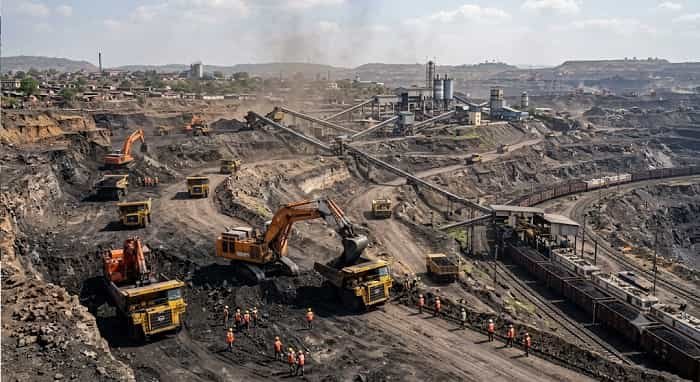
Minerals are the hidden strength behind India’s industries. Iron ore gives life to steel plants, bauxite supports aluminium, limestone feeds cement factories, coal powers industries, and zinc, copper, manganese, chromite and gold support many manufacturing sectors. A mineral-rich state does not only produce raw material; it also supports jobs, transport, power plants, ports, factories and government revenue.
For this 2026 list, the ranking is based on overall mineral production strength, mining value, mineral diversity, active mining belts and industrial importance. India’s mining output by value is heavily concentrated in mineral-rich states such as Odisha, Rajasthan, Chhattisgarh, Jharkhand, Karnataka, Andhra Pradesh, Telangana and Madhya Pradesh.
Now let’s check out the top 5 minerals producing states in India in 2026.
1. Odisha
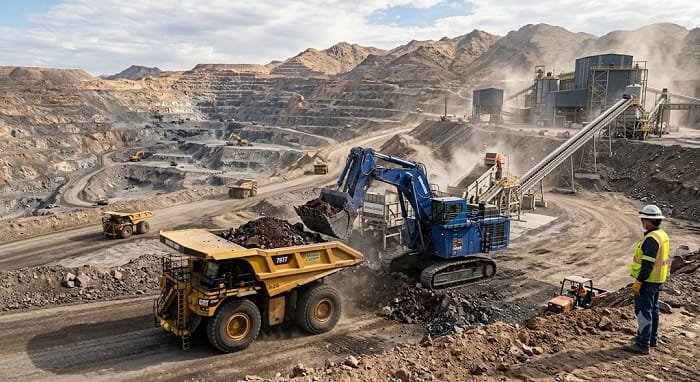
Odisha is the largest and most important minerals producing state in India in 2026.
The state is famous for iron ore, bauxite, chromite, manganese, coal, nickel and limestone. Its major mining belts are found in Keonjhar, Sundargarh, Jajpur, Mayurbhanj, Koraput, Rayagada, Angul, Jharsuguda and Kalahandi. Keonjhar and Sundargarh are especially known for iron ore, while Jajpur’s Sukinda valley is famous for chromite.
Odisha’s mineral strength is huge because the state holds around 35% of India’s iron ore reserves and 59% of its bauxite reserves, making it vital for India’s steel and aluminium industries. Odisha Mining Corporation’s output for 2024–25 was reported at 40.3 million tonnes of iron, chrome and bauxite ores including ferro chrome, and the corporation targeted 50 million tonnes production for 2025–26.
Odisha deserves the first position because it is strong in both volume and value. The state supplies raw material to steel plants, aluminium refineries, ferrochrome industries and power plants. Rourkela, Kalinganagar, Angul, Jharsuguda and Paradip are closely linked with this mineral economy.
2. Rajasthan
Rajasthan ranks second among India’s top minerals producing states.
The state is one of India’s most mineral-diverse regions. It is famous for zinc, lead, silver, limestone, marble, sandstone, gypsum, rock phosphate, copper, lignite, granite and salt. Important mining areas include Udaipur, Bhilwara, Chittorgarh, Rajsamand, Ajmer, Jodhpur, Nagaur, Barmer, Bikaner, Kota, Sikar and Jhunjhunu.
Rajasthan is especially powerful in non-ferrous and non-metallic minerals. It has a dominant position in zinc and lead production, while marble from Makrana, Kishangarh and Rajsamand is famous across India. The state is also India’s major source of gypsum, sandstone, phosphate rock, calcite and limestone. Rajasthan has 82 types of minerals, with 57 under active extraction, which shows its huge geological variety.
Hindustan Zinc’s major operations are also based in Rajasthan. The company is India’s largest zinc producer, and in 2025 it approved a major expansion project worth about $1.39 billion, showing the state’s continued strength in zinc, lead and silver mining.
Rajasthan deserves second position because it is not dependent on only one mineral. Its mining economy is wide, old, organised and connected with cement, metal, stone, marble, salt and fertiliser industries.
3. Chhattisgarh
Chhattisgarh stands third among the highest minerals producing states in India.
The state is famous for coal, iron ore, limestone, bauxite, dolomite, tin ore and diamonds. Its major mining belts are located in Korba, Raigarh, Surguja, Koriya, Dantewada, Bastar, Narayanpur, Durg, Rajnandgaon and Bilaspur. Korba is one of India’s major coal and power centres, while Bailadila in Dantewada is famous for high-quality iron ore.
Chhattisgarh has become one of India’s strongest mining-based economies. In 2024–25, the state’s mining sector recorded mineral revenue of more than ₹15,000 crore, with strong growth from the previous year. Another report noted that mining accounted for 9.38% of Chhattisgarh’s GSDP, higher than Odisha and Jharkhand in that specific measure.
The state is also important because it has India’s only primary tin ore-producing areas in the Bastar region. Coal and iron ore make Chhattisgarh a backbone state for power generation and steel production.
Chhattisgarh deserves third position because of its coal strength, Bailadila iron ore, limestone reserves, mining revenue and strong connection with steel, cement and power industries.
4. Jharkhand
Jharkhand ranks fourth among India’s top minerals producing states in 2026.
The state is one of India’s classic mineral heartlands. It is famous for coal, iron ore, copper, mica, bauxite, uranium, limestone, manganese, graphite, fire clay and gold traces. Major mining regions include Dhanbad, Bokaro, Giridih, Hazaribagh, Ramgarh, West Singhbhum, East Singhbhum, Ranchi and Palamu.
Dhanbad is known as the coal capital of India, while Jamshedpur and Bokaro are among India’s major steel centres. West Singhbhum is important for iron ore, and East Singhbhum is known for copper and uranium-linked mining activity.
Jharkhand accounts for about 40% of India’s total mineral reserves and ranks first in coal reserves, while also holding important deposits of iron ore, bauxite, copper, limestone and other minerals. The state’s large deposits of coal and iron ore support industries in Jamshedpur, Dhanbad, Bokaro and Ranchi.
Jharkhand deserves fourth position because its mineral base is deep, diverse and historically important. It has powered India’s coal, steel and metal industries for decades.
5. Karnataka
Karnataka completes the list of the top five minerals producing states in India in 2026.
The state is famous for iron ore, gold, manganese, limestone, bauxite, dolomite, quartz, granite, silica sand and chromite. Major mining areas include Ballari, Chitradurga, Raichur, Bagalkot, Vijayapura, Tumakuru, Koppal, Kalaburagi and parts of Hassan.
Karnataka’s Ballari-Hospet belt is one of India’s most important iron ore regions. The state is also special because it is India’s main gold-producing state through Hutti Gold Mines in Raichur district. Karnataka has rich deposits of gold, iron ore, quartz, limestone, manganese, kyanite and bauxite, and Hutti Gold Mines is the only major company mining and extracting gold from ore in India.
Karnataka is also important for granite and building stones, especially because its ornamental granite is used in domestic and export markets. Its mineral economy supports steel, cement, construction, jewellery and industrial raw-material sectors.
Karnataka deserves fifth position because it has a strong iron ore belt, gold mining identity, manganese deposits, limestone reserves and a long mining history.
Final Words
The top five minerals producing states in India in 2026 are Odisha, Rajasthan, Chhattisgarh, Jharkhand and Karnataka. Odisha leads through iron ore, bauxite and chromite, while Rajasthan stands out for mineral diversity and non-ferrous metals.
These states are important for India’s steel, aluminium, cement, power, construction and manufacturing sectors. Their future success will depend on balanced mining, value addition, environmental protection and better development of mining regions.