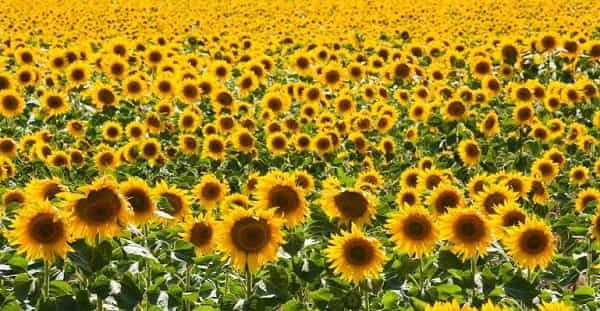
Sunflower is one of the most beautiful oilseed crops grown in India. Its bright yellow flowers may look decorative from a distance, but for farmers and oil mills, the crop has serious economic value. Sunflower seed is crushed for edible oil, and sunflower oil is popular because of its light colour, mild taste and wide use in Indian kitchens.
The crop is also important for India’s edible oil security. India still depends heavily on imported edible oils, including sunflower oil, so every domestic sunflower-growing belt has value. In 2024, India approved a large edible-oil mission to increase domestic oilseed output and reduce import dependence. The plan focuses on better seeds, higher productivity and expansion of oilseed crops across suitable regions.
For this 2026 list, the ranking is based on the latest available production pattern, traditional sunflower-growing belts, present cultivation strength and oilseed importance of each state. Sunflower is not as widely produced as mustard, groundnut or soybean, so the crop is concentrated mainly in selected dryland and semi-irrigated regions.
Now let’s check out the top 5 sunflower producing states in India in 2026.
1. Karnataka
Karnataka is the largest sunflower producing state in India in 2026.
The state has the strongest historical connection with sunflower cultivation. Sunflower was once one of Karnataka’s major oilseed crops, especially in the dry and semi-arid belts of north and central Karnataka. Districts such as Bagalkot, Vijayapura, Ballari, Koppal, Raichur, Gadag, Haveri, Davanagere, Chitradurga and Kalaburagi have been important for sunflower farming.
Karnataka’s advantage is its dryland farming system. Sunflower can grow in areas where farmers need a shorter-duration oilseed crop with moderate water requirement. It is grown in kharif, rabi and summer seasons depending on rainfall, irrigation and local cropping patterns.
However, Karnataka’s sunflower area has declined over the years because of disease problems, shifting crop choices and better returns from maize, pulses and other crops. Recent reports say sunflower and safflower cultivation in Karnataka has fallen to nearly 12% of earlier levels, but the state is now trying to revive oilseed farming through improved seed varieties, demonstrations and farmer training.
Even with this decline, Karnataka remains number one because of its old sunflower base, farmer experience, suitable climate and strong revival potential under the national oilseed mission.
2. Maharashtra
Maharashtra ranks second among India’s top sunflower producing states.
The state has a strong dryland farming belt where oilseeds play an important role. Sunflower is grown in selected parts of Marathwada, Vidarbha and western Maharashtra. Important regions include Solapur, Latur, Osmanabad, Beed, Ahmednagar, Jalna, Akola, Amravati and parts of Nagpur division.
Maharashtra’s sunflower farming is mainly linked with rainfed and semi-irrigated agriculture. Farmers often grow it as an alternative oilseed crop where soil and rainfall conditions are suitable. The crop fits well in areas where farmers want a shorter-duration crop and do not want to depend only on cotton, soybean, pulses or jowar.
The state’s strength is its oilseed culture and market network. Maharashtra already has strong experience in crops like soybean, groundnut, safflower and sesame. Sunflower benefits from this wider oilseed ecosystem because farmers, traders and processors are already connected with edible-oil markets.
Maharashtra deserves the second position because it has a wide agricultural base, large dryland regions and long experience with commercial oilseed crops. Its sunflower area may vary from season to season, but it remains one of India’s most important sunflower-growing states.
3. Andhra Pradesh
Andhra Pradesh stands third among the highest sunflower producing states in India.
The state has suitable regions for sunflower cultivation, especially in Rayalaseema and parts of coastal Andhra. Districts such as Kurnool, Anantapur, Kadapa, Chittoor, Prakasam and Nellore have been associated with sunflower and other oilseed crops. The crop is grown where farmers want an oilseed option under dry or limited-irrigation conditions.
Andhra Pradesh’s agriculture is supported by major river systems and irrigation projects, but many areas still depend on rainfall. In such regions, sunflower becomes useful because it can fit into crop rotations with groundnut, pulses, millets and cotton. The state has also seen interest in vegetable-oil crops like sunflower and groundnut in recent years.
The state’s sunflower performance can change according to rainfall and sowing conditions. In the 2025 kharif cycle, sunflower sowing in Andhra Pradesh lagged behind normal coverage, showing that the crop remains sensitive to seasonal decisions and farmer preference.
Andhra Pradesh remains in the top three because it has suitable climate, old oilseed belts, farmer familiarity and strong potential to expand sunflower cultivation if prices and seed support improve.
4. Telangana
Telangana ranks fourth among the leading sunflower producing states in India.
The state has a dryland farming tradition where crops like cotton, maize, pulses, groundnut and sunflower are grown according to rainfall, soil and price conditions. Sunflower has been grown in selected districts such as Mahabubnagar, Nalgonda, Warangal, Medak, Karimnagar, Adilabad and nearby regions.
Telangana’s sunflower importance comes from its semi-arid climate. The crop can be grown in dry regions where farmers need an oilseed crop that fits into short seasonal windows. It is also useful in crop diversification because farmers do not want to depend on only cotton, paddy or maize.
The state has a growing edible-oil processing connection as well. A major edible-oil refinery investment in Telangana includes sunflower seed crushing, solvent extraction, refining and cold-pressed oil production, showing that sunflower has value beyond farm production alone.
Telangana deserves fourth position because it has suitable growing conditions, a dryland oilseed base and increasing processing relevance. With better seed supply, assured procurement and extension support, the state can strengthen its sunflower economy further.
5. Odisha
Odisha completes the list of the top five sunflower producing states in India in 2026.
Odisha is not usually the first name people think of when they talk about sunflower, but the crop has a place in the state’s agricultural economy. Sunflower is grown in selected districts where farmers take up oilseeds along with paddy, pulses and vegetables. The crop is useful in suitable dry and irrigated pockets, especially where farmers want crop diversification.
Important sunflower-growing areas are found in parts of western and coastal Odisha, including districts such as Kalahandi, Balangir, Nuapada, Bargarh, Sambalpur, Ganjam and nearby belts. The state has a mixed farming system, and sunflower fits into areas where water availability and market access support oilseed cultivation.
Odisha’s agricultural output profile has included sunflower among its notable crops, and older output-share data also showed the state having a meaningful place in sunflower production.
Odisha’s position in the top five comes from its crop-diversification potential, oilseed cultivation base and suitable pockets for sunflower farming. The crop may not dominate the state’s agriculture, but it remains important in India’s wider sunflower production map.
Final Words
The top five sunflower producing states in India in 2026 are Karnataka, Maharashtra, Andhra Pradesh, Telangana and Odisha. Karnataka remains the strongest sunflower state, while Maharashtra and the southern oilseed belts keep the crop important.
Sunflower farming can become more valuable in the coming years if farmers get better seeds, stable prices, disease-resistant varieties and stronger oilseed-processing support.