Silver is not mined in India the same way coal, iron ore or limestone are mined. In India, silver is mostly recovered as a by-product of lead-zinc and other base-metal mining, so its production is highly concentrated in a few mineral belts. This is why the silver map of India is dominated by Rajasthan, while other states are important more for reserves, associated minerals, future mining potential or small-scale contribution.
Silver is used in jewellery, coins, electronics, solar panels, batteries, medical products, photography, industrial alloys and investment bars. With rising demand from renewable energy and electronics, silver has become more valuable than just an ornamental metal. India produced around 800 tonnes of silver in 2024, while Hindustan Zinc remains one of the most important silver producers linked with India’s domestic output.
For this 2026 list, the ranking is based on actual silver production, silver-bearing mineral belts, lead-zinc mining, reserves, smelting strength and future potential.
Now let’s check out the top 5 silver producing states in India in 2026.
1. Rajasthan
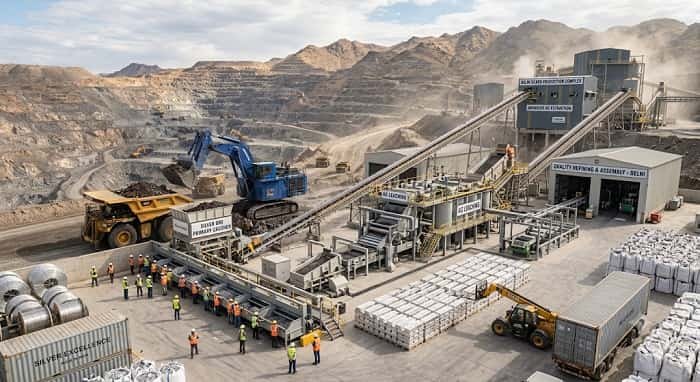
Rajasthan is the largest silver producing state in India in 2026. The state dominates India’s silver production because silver is mainly recovered from its rich lead-zinc deposits. Important silver-linked mining regions are found in Udaipur, Rajsamand, Bhilwara, Chittorgarh and Ajmer belts. Famous mining areas include Rampura Agucha, Sindesar Khurd, Rajpura-Dariba, Zawar and Kayad.
Rajasthan holds the largest silver deposits in India and remains the top contributor to national silver output. Reports based on Indian Bureau of Mines references mention that Rajasthan’s silver-rich belts are mainly connected with lead-zinc mining in areas like Zawar and Rampura Agucha.
Hindustan Zinc is the biggest name behind Rajasthan’s silver strength. The company operates major zinc-lead-silver mines in Rajasthan and is counted among the world’s major silver producers. Reuters recently described Hindustan Zinc as the world’s third-largest silver producer, showing how important Rajasthan is not only for India but also for the global silver market.
Rajasthan deserves the first position because it has actual production, large reserves, active mines, smelting facilities, trained manpower and a complete lead-zinc-silver ecosystem. No other Indian state comes close to Rajasthan in silver.
2. Jharkhand
Jharkhand ranks second among India’s important silver-producing and silver-bearing states. The state is famous for coal, iron ore, copper, mica, uranium and other minerals, but it also has silver-bearing mineral potential. Silver is generally associated with base-metal deposits, especially copper, lead and zinc mineralisation. Jharkhand’s mining strength comes from regions like East Singhbhum, West Singhbhum, Dhanbad, Hazaribagh, Ranchi and Palamu.
East Singhbhum is especially important because of its copper and base-metal belt around places such as Ghatsila and Singhbhum. Since silver can occur as a by-product in base-metal ores, Jharkhand remains important in India’s wider silver-resource map.
Recent reporting on India’s silver deposits also mentions Jharkhand among the states with notable silver resources, though Rajasthan remains far ahead in actual production.
Jharkhand deserves second position because it has a strong mineral base, base-metal belts and future potential for silver recovery. However, its actual silver production is much smaller than Rajasthan.
3. Gujarat
Gujarat stands third among India’s silver-producing and silver-resource states in 2026. The state is already one of India’s strongest mineral and industrial states. It has important mineral resources, coastal industrial zones, chemical industries, refineries, ports and metal-processing activity. Gujarat’s silver importance is mainly linked with mineral resources and industrial use rather than huge mine output.
Important mineral and industrial belts include Kutch, Banaskantha, Bharuch, Jamnagar, Surat, Vadodara and Ahmedabad regions. Gujarat is also closely connected with jewellery, bullion trading, refining, chemicals and industrial consumption of metals.
Reports on silver deposits in India mention Gujarat among the states with notable silver resources, although Rajasthan remains the clear production leader. This makes Gujarat important in India’s silver economy, especially from a resource and processing angle.
Gujarat deserves third position because of its mineral potential, industrial ecosystem, refining and trading strength. Its future silver role can grow if more silver-bearing mineral blocks are explored and developed.
4. Andhra Pradesh
Andhra Pradesh ranks fourth among India’s important silver-linked mineral states. The state has a rich mineral base and is known for barytes, limestone, mica, manganese, beach sand minerals, gold-bearing areas and other resources. Andhra Pradesh is also growing as a mining and mineral-processing state, with new investment in metals and steel projects.
Important mineral regions include Kurnool, Kadapa, Anantapur, Nellore, Prakasam, Visakhapatnam and Srikakulam belts. While Andhra Pradesh is not a large silver producer like Rajasthan, its mineral-rich geology and expanding mining activity keep it important in India’s precious and base-metal discussion.
The state has recently gained attention in gold mining through the Swarnagiri/Jonnagiri project in Kurnool district, showing that Andhra Pradesh is becoming more active in precious-metal mining. This does not make it a major silver producer yet, but it shows the state’s growing mining potential.
Andhra Pradesh deserves fourth position because of its mineral diversity, precious-metal potential, mining investment and future scope for associated silver recovery from base-metal and polymetallic deposits.
5. Karnataka
Karnataka completes the list of the top five silver producing and silver-bearing states in India in 2026. The state is better known for gold, iron ore, manganese, limestone and granite, but it has a long history in precious-metal mining. Karnataka’s most famous precious-metal belt is connected with Hutti Gold Mines in Raichur district and the historic Kolar Gold Fields region.
Important mineral belts include Raichur, Kolar, Chitradurga, Ballari, Tumakuru, Bagalkot and Kalaburagi. Silver can be associated in small quantities with gold and base-metal ores, so Karnataka has a place in India’s broader silver-resource map even though it is not a major silver producer like Rajasthan.
Karnataka’s strength is its mining history, geological potential and mineral-processing knowledge. The state has active precious-metal mining through Hutti Gold Mines and a strong base in mineral exploration. India’s list of gold mines includes Hatti/Hutti in Karnataka as one of the country’s important working gold-mining areas.
Karnataka deserves fifth position because of its precious-metal mining background, gold-linked mineral belts and future exploration potential. Its silver output is limited, but its mineral base keeps it relevant.
Final Words
The top five silver producing and silver-bearing states in India in 2026 are Rajasthan, Jharkhand, Gujarat, Andhra Pradesh and Karnataka. Rajasthan is the clear leader because most of India’s actual silver output comes from its lead-zinc-silver mining belt.
India’s silver production is still small compared with demand. Better exploration, base-metal mining, recovery technology, refining and recycling can help the country strengthen its silver economy in the coming years.