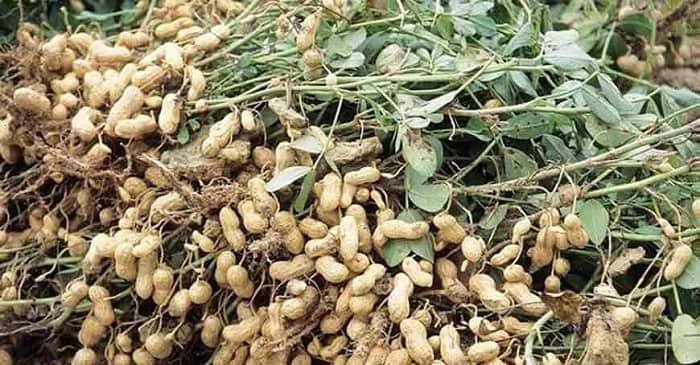
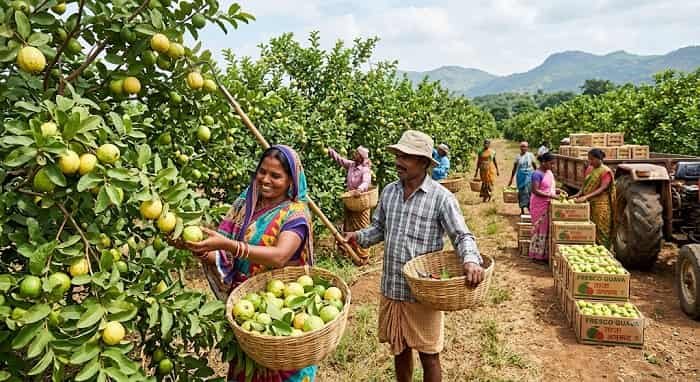
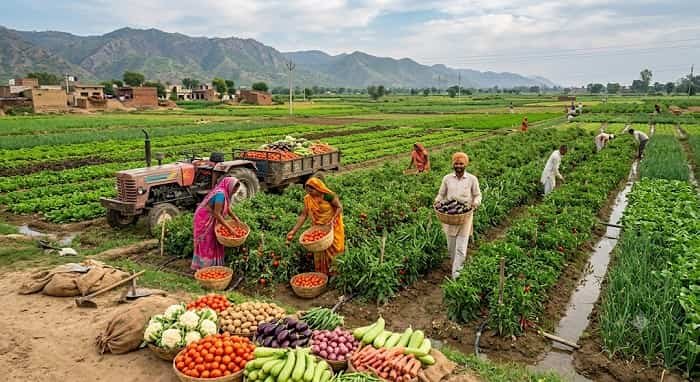
Fish production in India is not just about boats returning from the sea. It is also about ponds full of rohu and catla, shrimp farms glowing beside coastal villages, river-based fishing communities, cold-chain trucks, seafood exporters, local markets and millions of families who depend on fisheries for income. From Andhra Pradesh’s aquaculture ponds to Bengal’s fish-loving markets and Gujarat’s long marine coastline, India’s fisheries sector has become one of the strongest parts of the rural economy.
For this 2026 list, “fish producing states” means total fish production, including inland fish farming, marine fishing, brackish-water aquaculture and shrimp culture. The ranking is based on the latest available production pattern, recent state-level fishery updates and the overall strength of each state in India’s fisheries economy. Andhra Pradesh remains the clear leader, while West Bengal, Uttar Pradesh, Gujarat and Odisha form the next major group. West Bengal is reported as the second-largest fish producing state with around 20.45 lakh tonnes of annual fish production, while Uttar Pradesh touched 11.56 lakh tonnes in 2023–24 and Gujarat is expected to cross 10 lakh tonnes in the 2024–25 fishing year.
Now let’s check out the top 5 fish producing states in India in 2026.
1. Andhra Pradesh
Andhra Pradesh is the largest fish producing state in India in 2026.
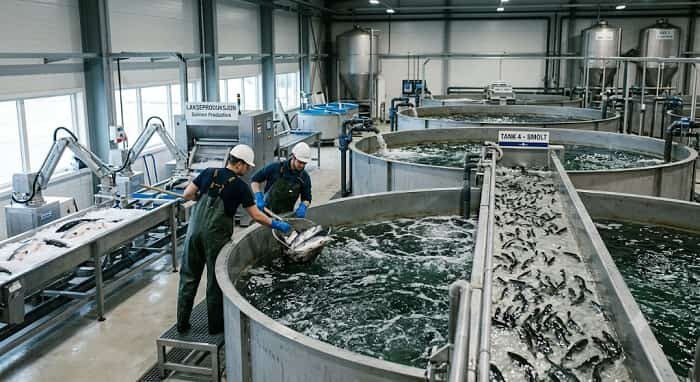
The state has built a powerful fisheries economy through inland fish farming, brackish-water aquaculture, shrimp farming and coastal fishing. Andhra Pradesh is especially strong in aquaculture, which has made it the biggest name in India’s fish and shrimp production map. The Godavari and Krishna delta belts are the heart of this growth.
Major fish-producing regions include West Godavari, East Godavari, Krishna, Kakinada, Nellore, Guntur, Prakasam and Visakhapatnam. These regions have large pond networks, hatcheries, feed units, processing centres and export connections. Farmers here produce fish as well as shrimp on a commercial scale.
Andhra Pradesh’s biggest strength is that it is not dependent only on sea fishing. Its inland and brackish-water aquaculture is highly organised. Fish ponds, shrimp ponds, seed production centres and processing units have created a complete chain from production to export.
The state’s marine fish landings faced pressure in 2025 because of weather disturbance and cyclonic impact, but its overall aquaculture strength still keeps Andhra Pradesh far ahead of other states. In 2025, Andhra Pradesh’s marine landings were reported at 1.52 lakh tonnes, lower than the previous year, yet the state remains India’s strongest total fish producer because aquaculture forms the main backbone of its fisheries economy.
2. West Bengal
West Bengal ranks second among the highest fish producing states in India.
Fish is deeply connected with the food culture and economy of West Bengal. From village ponds to river systems and coastal belts, fish production is spread across many parts of the state. Bengal’s love for fish is not only cultural; it also supports lakhs of fish farmers, traders, transporters and small market sellers.
The state is especially strong in inland fish farming. Major production comes from ponds, tanks, wetlands, rivers and low-lying water bodies. Districts such as South 24 Parganas, North 24 Parganas, East Midnapore, Howrah, Hooghly, Nadia, Murshidabad and Malda are important in the fisheries economy.
West Bengal produces popular freshwater fish like rohu, catla, mrigal and other carp varieties. The state also has brackish-water shrimp farming in coastal districts. Its large local demand makes the fish market very active throughout the year.
West Bengal deserves the second position because it combines production, consumption and strong local trade. Fish is a daily food item for many households, and this strong internal demand gives farmers a stable market. With annual production reported around 20.45 lakh tonnes, West Bengal remains one of India’s most dependable fish-producing states.
3. Uttar Pradesh
Uttar Pradesh stands third among India’s top fish producing states in 2026.
Unlike Andhra Pradesh, Gujarat or Odisha, Uttar Pradesh does not have a sea coast. Its entire fisheries strength comes from inland water resources. This makes its rise even more important. The state has rivers, ponds, tanks, reservoirs, wetlands and village water bodies that support large-scale inland fish farming.
Uttar Pradesh’s fish production increased strongly in recent years. In 2023–24, the state’s fish output touched 11.56 lakh tonnes, showing a 26.4% rise from the previous year. The fisheries sector also contributed strongly to the state economy, with major inland fish-producing districts including Gorakhpur, Bahraich, Hardoi, Etah and Mahoba.
The state mainly produces freshwater fish such as rohu, catla, mrigal, pangasius and other carp varieties. Fish farming has become a good income option for rural families, especially where ponds and water bodies are available.
Uttar Pradesh deserves its high rank because it has shown how inland fisheries can grow without marine resources. With better pond development, seed supply, training and fish markets, the state has become one of India’s fastest-growing fish producers.
4. Gujarat
Gujarat ranks fourth among India’s major fish producing states.
The state has one of the longest coastlines in India, and marine fishing is the backbone of its fisheries economy. Gujarat is especially known for its strong marine catch, fishing harbours, seafood trade and export-linked fishery activities. Major fishing centres include Veraval, Porbandar, Mangrol, Okha, Jakhau, Sutrapada and nearby coastal belts.
Gujarat’s production strength comes from both marine and inland fisheries. Between October 2023 and September 2024, the state produced around 9.08 lakh metric tonnes of fish. For the October 2024 to September 2025 period, production was projected to reach about 10.37 lakh metric tonnes, supported by growth in both marine and inland production.
The state is also important because it has a strong seafood processing and export network. Marine fish, shrimp, dried fish and other seafood products move from Gujarat’s coastal belt to domestic and international markets.
Gujarat remains one of India’s top fisheries states because of its coastline, fishing communities, port facilities, marine catch and growing inland fish production. New fishing ports and fisheries infrastructure projects can further strengthen its position in the coming years.
5. Odisha
Odisha completes the list of the top five fish producing states in India in 2026.
Odisha has a strong mix of marine, inland and brackish-water fisheries. The state has a long coastline along the Bay of Bengal, along with rivers, reservoirs, ponds, wetlands and Chilika Lake, one of India’s most famous brackish-water ecosystems. This gives Odisha a natural advantage in fish and shrimp production.
Major fish-producing regions include Balasore, Bhadrak, Kendrapara, Jagatsinghpur, Puri, Ganjam and other coastal districts. Chilika is especially important for fish, prawn and crab production. Inland fish farming is also expanding in many districts through ponds and tanks.
Odisha’s seafood economy has strong export value, especially in shrimp. The state’s fisheries sector supports fishermen, fish farmers, women workers, processing units and seafood exporters. In FY 2024–25, Odisha’s seafood exports were reported at around ₹4,700 crore, showing the economic importance of this sector.
Odisha’s position in the top five comes from its coastal resources, brackish-water potential, growing aquaculture and export-linked seafood industry. The state government has also set an ambitious long-term target of reaching 3.3 million metric tonnes of annual fish production by 2036, which shows how important fisheries are becoming for Odisha’s future economy.
Final Words
The top five fish producing states in India in 2026 are Andhra Pradesh, West Bengal, Uttar Pradesh, Gujarat and Odisha. Andhra Pradesh leads because of its massive aquaculture and shrimp farming base. West Bengal holds second place through strong inland fisheries and huge fish demand. Uttar Pradesh has become a major inland fish producer. Gujarat remains powerful because of marine fishing and seafood trade, while Odisha completes the list with its coastal, inland and brackish-water strength.
Together, these five states form the backbone of India’s fisheries economy. Their fish farms, rivers, ponds, harbours, processing units and export networks support millions of livelihoods and make fish production one of India’s most important food and rural-income sectors.