India does not give every state the same type of constitutional treatment. Some states have special provisions because of tribal identity, historical merger, border sensitivity, land rights, regional imbalance or cultural protection. These provisions do not mean that one state is “above” another state. They simply recognise that some regions need extra safeguards to protect their people, land, customs and development needs.
For this 2026 list, “special status states” means states with important special constitutional provisions, mainly under Article 371 and its sub-articles. This is different from the old Jammu & Kashmir Article 370 model, which was revoked in 2019 and the former state was reorganised into Union Territories.
Now let’s check out the top 5 special status states in India in 2026.
1. Nagaland
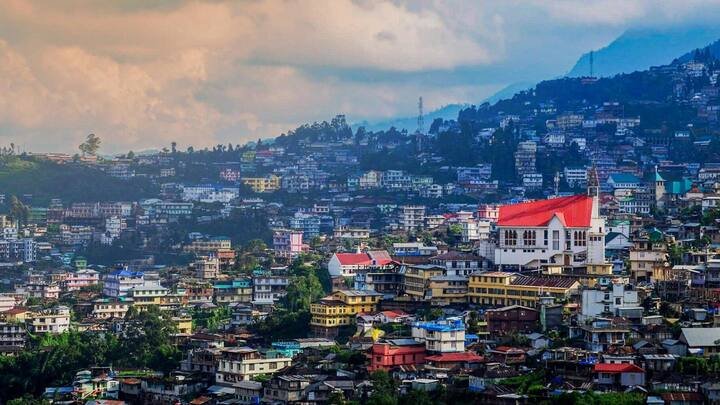
Nagaland has one of the strongest special constitutional protections in India.
The state is protected under Article 371A, which gives special safeguards to Naga religious and social practices, customary law, traditional justice systems and ownership of land and resources. This means Parliament’s laws on these matters do not automatically apply unless the Nagaland Legislative Assembly decides to accept them.
This special status is important because Nagaland has a strong tribal and customary system. Land in many parts of the state is closely connected with community identity, clans, villages and traditional institutions. The protection helps preserve local culture while keeping Nagaland within the Indian constitutional framework.
Nagaland’s special status is often discussed because it gives strong protection over land ownership and transfer. Recent property-law discussions also mention Nagaland as one of the states where land ownership is highly restricted for outsiders due to special protections and local customary rights.
Nagaland deserves the first position because Article 371A gives it one of the clearest and strongest constitutional safeguards among Indian states.
2. Mizoram
Mizoram ranks second among India’s most important special status states.
The state is protected under Article 371G, which gives special recognition to Mizo religious and social practices, customary law, traditional civil and criminal justice systems, and ownership of land. Like Nagaland, laws made by Parliament on these protected matters do not automatically apply unless the Mizoram Legislative Assembly approves them.
Mizoram’s special status is deeply connected with its history, tribal identity and peace process. The state has a unique social structure, strong community institutions and a distinct cultural identity. Constitutional protection helps preserve this identity while allowing the state to develop under India’s federal system.
Mizoram is also regularly mentioned along with Nagaland and Sikkim as one of the states having strong constitutional safeguards. In 2026, Ladakh representatives even discussed possible safeguards on the lines of Articles 371A, 371F and 371G, showing how important these provisions remain in India’s federal debate.
Mizoram deserves the second position because Article 371G protects both culture and land rights in a direct and meaningful way.
3. Sikkim
Sikkim holds a very special place in India’s constitutional map.
The state is protected under Article 371F, which was created after Sikkim became a part of India. This provision protects many old laws, local rights and political arrangements that existed before Sikkim’s merger with India. It helped ensure that Sikkim’s transition into the Indian Union happened without suddenly disturbing its local identity and administrative structure.
Sikkim’s special status is important because the state has a distinct history, small population, sensitive Himalayan location and unique social composition. Land and identity protections are especially important here. Non-residents face restrictions in buying land, and Sikkim is often discussed as one of India’s most protected real-estate markets because of Article 371F.
The state’s special status is not only about land. It is also about preserving the historical terms under which Sikkim joined India. That makes Article 371F one of the most unique special provisions in the Constitution.
Sikkim deserves third position because its special status is linked with both historical merger and protection of local rights.
4. Arunachal Pradesh
Arunachal Pradesh is another important special status state in India.
The state is covered under Article 371H, which gives the Governor special responsibility for law and order. This provision reflects Arunachal Pradesh’s sensitive border location, tribal diversity and strategic importance. The state shares international borders with China, Bhutan and Myanmar, making its administrative importance very high.
Arunachal Pradesh’s special status is different from Nagaland or Mizoram. Article 371H is not as strong in protecting tribal customs and land rights as Articles 371A and 371G. This difference has also been discussed in recent political debates, with some leaders arguing that Arunachal needs stronger constitutional safeguards for tribal customs, land ownership and natural resources.
Even then, Arunachal Pradesh remains one of India’s most important special-provision states because of its geography, indigenous communities and national-security importance. The state’s land and customary systems are closely linked with tribal society, and development projects often require careful balancing of local rights and strategic needs.
Arunachal Pradesh deserves fourth position because its special status is tied to border security, tribal identity and sensitive governance.
5. Karnataka
Karnataka completes the list because of the special provision given to the Kalyana Karnataka region.
The state is covered under Article 371J, which gives special status to the former Hyderabad-Karnataka region, now called Kalyana Karnataka. This provision was inserted to address regional backwardness in districts such as Kalaburagi, Bidar, Yadgir, Raichur, Koppal and Ballari. It provides for a separate development board, fair allocation of development funds, and reservation in education and public employment for people from the region.
Karnataka’s special status is different from the North Eastern states. It is not mainly about tribal customary law or land ownership. It is more about correcting regional imbalance inside a larger state. The Kalyana Karnataka region had lagged behind in education, employment, infrastructure and public investment, so Article 371J was created to give it focused support.
This makes Karnataka an important example of how special status can be used for development justice. Instead of protecting a whole small state, it protects a backward region within a large state.
Karnataka deserves a place in the top five because Article 371J directly affects education, jobs, development funds and regional planning.
Final Words
The top five special status states in India in 2026 are Nagaland, Mizoram, Sikkim, Arunachal Pradesh and Karnataka. Each state has a different reason for special protection, such as tribal customs, land rights, historical merger, border sensitivity or regional development.
These provisions show that India’s Constitution is flexible enough to protect diversity while keeping the country united.