Apple is one of India’s most valuable hill fruits. Before it reaches fruit mandis, juice factories, retail shops and family dining tables, it begins its journey in cold mountain orchards where snowfall, chilling hours, altitude, soil and careful pruning decide the quality of every fruit. From the red apples of Kashmir to the orchard belts of Himachal Pradesh, Uttarakhand and the North East, apple farming supports growers, transporters, traders, packaging units, cold stores and fruit-processing businesses.
For this 2026 list, “apple producing states” means India’s major apple-growing states and union territories based on the latest available production pattern, orchard concentration and recent horticulture updates. Jammu & Kashmir remains the clear leader, followed by Himachal Pradesh. Uttarakhand, Arunachal Pradesh and Sikkim complete the top five, though their production is much smaller than the first two. Himachal Pradesh recorded 6.47 lakh metric tonnes of apple production in 2025–26, while it continues to be India’s second-largest apple producer after Kashmir.
Now let’s check out the top 5 apple producing states in India in 2026.
1. Jammu Kashmir
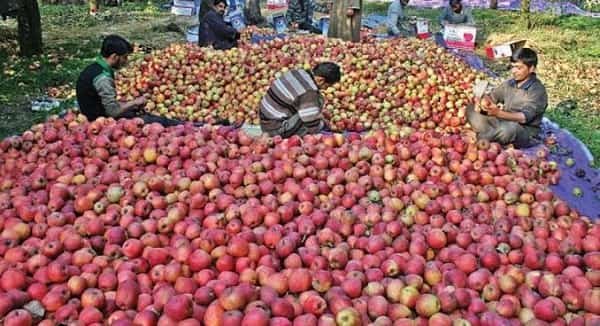
Jammu & Kashmir is the largest apple producing region in India in 2026.
The apple economy of Jammu & Kashmir is mainly centred in the Kashmir Valley. Districts such as Shopian, Baramulla, Anantnag, Kulgam, Pulwama, Budgam, Kupwara and Ganderbal are among the most important apple-growing belts. Shopian is especially famous for high-quality apples and is often called one of the strongest apple districts in India.
Jammu & Kashmir deserves the first position because apple farming is not a small crop here; it is an economic backbone. The region produces the bulk of India’s apples and supplies fruit to markets across Delhi, Punjab, Maharashtra, Gujarat, West Bengal, Karnataka and other states. Apple cultivation also provides large-scale employment in orchards, harvesting, grading, packing, transport and trading.
The main varieties grown here include Delicious, Kulu Delicious, Ambri, Maharaji, Golden Delicious, Red Delicious and newer high-density varieties. In recent years, growers have also moved towards high-density apple plantations to improve yield and fruit quality.
The strength of Jammu & Kashmir comes from its climate, long tradition of apple farming, strong mandi network and brand value. Sopore, Shopian and other fruit markets play a huge role in moving Kashmir apples across India. Even with challenges such as weather damage, transport issues and import competition, Jammu & Kashmir remains the undisputed leader of India’s apple production.
2. Himachal Pradesh
Himachal Pradesh ranks second among the highest apple producing states in India.
The state is widely known as India’s “Apple State” because apple farming is deeply connected with its hill economy. Apple is the most important cash fruit crop of Himachal Pradesh and supports around 2.5 lakh families directly or indirectly. In 2025–26, the state’s apple production reached 6.47 lakh metric tonnes, rising from about 5.03 lakh metric tonnes in the previous year.
Major apple-producing districts include Shimla, Kullu, Kinnaur, Mandi, Chamba and parts of Sirmaur and Lahaul-Spiti. Shimla district, especially areas like Kotkhai, Rohru, Theog and Jubbal, is one of the most famous apple belts of the state. Kinnaur apples are also known for their quality, colour and market value.
Himachal Pradesh’s apple economy is strong because of its experienced growers, established orchards, fruit mandis, packing networks and road links to northern Indian markets. Apples from the state are sold in Delhi, Chandigarh, Punjab, Haryana, Rajasthan and many other regions.
However, Himachal’s apple sector is facing pressure from changing climate. Reduced snowfall, erratic rainfall, hailstorms and warming temperatures are affecting chilling hours and production stability. Reports in 2026 also warned that bad weather could sharply reduce apple output in the state.
Even with these challenges, Himachal Pradesh remains India’s second-biggest apple producer because of its large orchard area, strong farmer base and long horticulture tradition.
3. Uttarakhand
Uttarakhand stands third among India’s apple producing states in 2026.
The state’s apple production is mainly concentrated in its higher hill districts. Uttarkashi, Dehradun hill areas, Chamoli, Pithoragarh, Nainital, Almora and parts of Tehri are important apple-growing regions. The cold climate of these higher-altitude belts supports apple cultivation, especially where farmers have access to good planting material and irrigation.
Uttarakhand is much smaller than Jammu & Kashmir and Himachal Pradesh in apple production, but it has a special place in India’s hill fruit economy. The state produces apples along with other temperate fruits like pear, peach, plum, apricot and walnut. Apple farming is important for mountain farmers because it gives better income than many traditional cereal crops.
The state has also been encouraging high-density apple plantations and improved varieties in selected regions. Better nursery plants, training, pruning, grading and storage can help Uttarakhand improve both production and quality.
Uttarakhand deserves the third position because it has a natural hill advantage and an expanding orchard base. Its production is not as large as the top two, but among the remaining apple-growing states, it is one of the most important names.
4. Arunachal Pradesh
Arunachal Pradesh ranks fourth among the top apple producing states in India.
Apple farming in Arunachal Pradesh is mainly found in high-altitude districts where the climate is suitable for temperate fruits. Areas such as Tawang, West Kameng, Upper Subansiri, Lower Subansiri, Shi Yomi and nearby hill belts have potential for apple cultivation. The state is also known for other horticulture crops such as kiwi, orange, walnut and large cardamom.
Arunachal Pradesh’s apple production is smaller compared with Jammu & Kashmir, Himachal Pradesh and Uttarakhand, but the state is important because of its future potential. Its cool hill climate, large land resources and growing horticulture focus can make apple farming more valuable in selected belts.
The state has been promoting horticulture through plantation support and crop diversification. Apple, kiwi, walnut and other high-value crops are being encouraged to improve farmer income in hill regions. This is important because many remote areas need crops that can generate better returns and connect farmers with larger markets.
Arunachal Pradesh deserves a place in the top five because it is one of the few Indian states outside the western Himalayas where apple cultivation has a meaningful presence. With better roads, cold storage, nursery development and marketing support, its apple sector can grow stronger in the coming years.
5. Sikkim
Sikkim completes the list of the top five apple producing states in India in 2026.
Sikkim is not a large apple producer, but it grows apples in selected high-altitude areas where the climate is suitable. North Sikkim and parts of East and West Sikkim have conditions for temperate fruit cultivation. Apples are grown along with other fruits such as pear, peach, plum and orange.
The state’s strength is its clean hill environment and organic farming identity. Sikkim has built a strong name as India’s first fully organic state, and this gives its horticulture sector a special market image. Apple production here is limited, but it has value because of quality, niche demand and hill-fruit diversity.
Sikkim’s apple sector faces challenges such as small landholdings, difficult transport, limited scale and weather sensitivity. Still, apple farming remains useful for farmers in suitable high-altitude pockets. Improved varieties, better orchard management and stronger market links can help the state increase its presence in temperate fruit production.
Sikkim is included in the top five because India’s apple production is highly concentrated in a few Himalayan regions, and after the major producers, Sikkim remains one of the notable apple-growing states.
Final Words
The top five apple producing states and regions in India in 2026 are Jammu & Kashmir, Himachal Pradesh, Uttarakhand, Arunachal Pradesh and Sikkim. Jammu & Kashmir is the clear leader because of Kashmir’s massive apple orchards and national market reach. Himachal Pradesh holds second position with its strong apple economy and experienced growers. Uttarakhand is important for hill-based apple farming, while Arunachal Pradesh and Sikkim add North East India’s temperate fruit potential.
Apple farming in India will depend heavily on climate stability, chilling hours, high-density plantations, cold storage, transport, grading and better market prices. In the coming years, the states that manage weather risk and improve orchard technology will lead India’s apple production story.