India’s solar map is changing fast. What was once a future dream has now become one of the strongest pillars of India’s clean energy growth. From the dry deserts of Rajasthan to the industrial belts of Gujarat and Maharashtra, solar parks, rooftop panels, hybrid projects and off-grid systems are turning sunlight into serious power.
For this ranking, “solar energy producing states” means states with the highest installed solar power capacity. As per the Ministry of New and Renewable Energy’s latest available 2026 data, India’s total installed solar capacity reached 157.05 GW by 31 May 2026. This includes ground-mounted solar plants, rooftop solar, hybrid solar projects and off-grid solar capacity.
1. Rajasthan – India’s Solar King
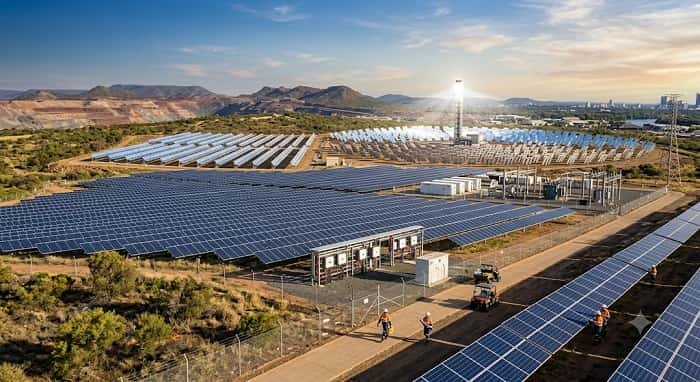
Rajasthan is the largest solar energy producing state in India in 2026. The state has around 42,166 MW of installed solar power capacity, making it the clear leader in the country.
The biggest reason behind Rajasthan’s dominance is its geography. The state has vast stretches of dry land, strong sunlight for most of the year and low population density in many desert regions. These conditions make it ideal for large solar parks. Areas like Jodhpur, Bikaner, Jaisalmer and Barmer have become major solar hubs.
Rajasthan’s solar growth is also supported by mega projects such as Bhadla Solar Park, one of the most famous solar parks in the world. The state has attracted huge investments from both public and private players. Its strong transmission network and land availability have made it the first choice for utility-scale solar projects.
In simple words, Rajasthan is not just producing solar power; it is shaping India’s solar future.
2. Gujarat – The Industrial Solar Powerhouse
Gujarat ranks second among the top solar energy producing states in India in 2026. The state has around 32,302 MW of installed solar capacity.
Gujarat has always been one of India’s most business-friendly and energy-focused states. It started early in renewable energy and has maintained strong momentum. The state has excellent solar radiation, good infrastructure, ports, industrial demand and investor-friendly policies.
One of Gujarat’s biggest strengths is the mix of solar and wind energy. The state is also pushing hybrid renewable projects, especially in dry and coastal regions. Places like Kutch have become important for large renewable energy parks.
Gujarat is also strong in rooftop solar. Cities like Ahmedabad, Surat, Vadodara and Rajkot have seen growing adoption of rooftop solar among households, industries and commercial buildings. This gives Gujarat a balanced solar profile, with both large solar parks and rooftop capacity contributing to its success.
3. Maharashtra – Strong Growth from Industry and Rooftop Solar
Maharashtra holds the third position with around 20,276 MW of installed solar power capacity in 2026.
Maharashtra’s rise is very important because it is one of India’s largest power-consuming states. Mumbai, Pune, Nagpur, Nashik and other industrial regions need huge electricity supply. Solar energy is helping the state reduce pressure on conventional power sources.
The state has good potential for both utility-scale solar and rooftop solar. Industrial rooftops, commercial buildings, warehouses, factories and residential societies have become important contributors. Maharashtra also has open-access solar projects, where industries buy solar power directly to reduce electricity costs.
Unlike Rajasthan and Gujarat, Maharashtra does not depend only on desert-style mega parks. Its solar growth is more mixed. It comes from industrial demand, rooftop adoption, rural solar projects and state-level renewable policies.
This makes Maharashtra one of India’s most practical solar growth stories.
4. Tamil Nadu – Southern India’s Renewable Energy Leader
Tamil Nadu ranks fourth with around 13,909 MW of installed solar capacity in 2026.
Tamil Nadu has long been known as a renewable energy leader, especially in wind power. Now, solar energy has become an equally important part of its clean energy journey. The state has strong industrial demand from Chennai, Coimbatore, Tiruppur, Hosur and other manufacturing regions.
The climate in many parts of Tamil Nadu supports solar generation for a major part of the year. The state has also encouraged solar parks, rooftop systems and solar use by industries. Textile units, auto companies, IT parks and manufacturing plants are increasingly using renewable power to reduce long-term electricity costs.
Tamil Nadu’s biggest advantage is its mature power ecosystem. It already has experience in managing renewable energy, especially wind. This helps the state integrate solar energy more efficiently into the grid.
With rising demand from industries and cities, Tamil Nadu is expected to remain one of India’s most important solar states.
5. Karnataka – A Consistent Solar Performer
Karnataka is fifth on the list with around 11,346 MW of installed solar power capacity in 2026.
Karnataka has been among India’s top solar states for many years. The state gained national attention because of large solar parks and strong renewable policies. Pavagada Solar Park in Tumakuru district is one of the major reasons behind Karnataka’s solar reputation.
The state has a healthy mix of large solar projects, rooftop solar and industrial solar use. Bengaluru’s commercial buildings, tech parks and institutions have also helped rooftop solar grow, though the state’s large ground-mounted projects remain the biggest contributor.
Karnataka’s energy demand is high because of IT, manufacturing, agriculture and urban growth. Solar power helps the state diversify its electricity supply and reduce dependence on thermal power.
Its ranking may have moved compared with earlier years, but Karnataka still remains one of India’s most reliable solar energy leaders.
Final Ranking
As per installed solar power capacity, the top five states are:
- Rajasthan – 42,166 MW
- Gujarat – 32,302 MW
- Maharashtra – 20,276 MW
- Tamil Nadu – 13,909 MW
- Karnataka – 11,346 MW
India’s solar journey is no longer limited to one or two states. Rajasthan and Gujarat are leading with massive solar parks, while Maharashtra, Tamil Nadu and Karnataka are building strong solar ecosystems through industries, rooftops and large projects. In 2026, these five states are the real backbone of India’s solar power revolution.