Urbanisation shows how much of a state’s population lives in towns and cities. A highly urbanised state usually has more municipal areas, industries, service-sector jobs, transport networks and city-based infrastructure. A least urbanised state, on the other hand, has most of its people living in villages, hill settlements, farming regions, forest belts or small rural communities.
For this 2026 list, only states are included, not Union Territories. Another important point is that India’s latest completed official Census is still the 2011 Census, while the delayed new Census process began in 2026 and is expected to conclude in 2027. So the ranking is based on the latest full official Census urbanisation pattern, not unofficial population projections.
Now let’s check out the top 5 least urbanised states in India in 2026.
1. Himachal Pradesh
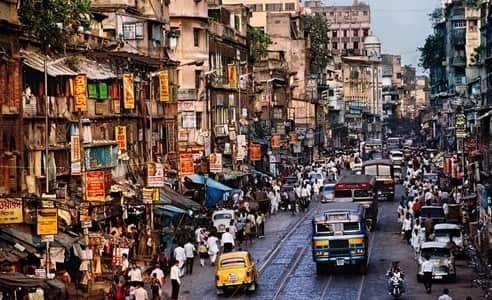
Only about 10.03% of Himachal Pradesh’s population lived in urban areas as per the 2011 Census urbanisation pattern, while nearly 89.97% lived in rural areas. This makes it the most rural state in India by urban population share.
The reason is clear from the state’s geography. Himachal Pradesh is a mountain state with scattered villages, valleys, forests and hill settlements. Large flat land for big cities is limited, so urban growth is naturally slower compared with plain or industrial states.
Shimla is the capital and the most important urban centre, while other towns such as Dharamshala, Solan, Mandi, Kullu, Chamba, Nahan and Baddi also play important roles. But even with tourism, apple farming, hydropower and small industries, most people still live outside major urban areas.
Himachal Pradesh deserves the first position because its settlement pattern is deeply rural and mountain-based. Its development model is more connected with villages, tourism towns, horticulture and local services than large-scale urban expansion.
2. Bihar
Bihar ranks second among the least urbanised states in India. The state’s urban population share was around 11.29%, while nearly 88.71% of people lived in rural areas as per the 2011 Census urbanisation table.
Bihar has a huge population, but most of it lives in villages. Agriculture, rural labour, small markets, local trade and migration shape much of the state’s economy. Even though Patna, Gaya, Bhagalpur, Muzaffarpur and Darbhanga are important urban centres, the state’s overall urban base remains small compared with its population size.
One reason for low urbanisation is that Bihar has fewer large industrial cities compared with states like Maharashtra, Gujarat, Tamil Nadu or Karnataka. Many people move outside the state for jobs instead of shifting into large cities within Bihar itself.
Bihar’s low urbanisation does not mean lack of importance. It means the state’s real development challenge lies in improving rural roads, schools, health centres, digital access, farming income, small towns and local employment.
3. Assam
Assam stands third among India’s least urbanised states in 2026. The state’s urban population share was about 14.10%, while around 85.90% of people lived in rural areas as per the 2011 Census urbanisation pattern.
Assam’s settlement pattern is shaped by the Brahmaputra Valley, Barak Valley, tea gardens, river islands, floodplains, forests and rural markets. Guwahati is the biggest city and the main urban centre of the North East, but outside Guwahati, much of Assam remains rural.
Important towns such as Silchar, Dibrugarh, Jorhat, Tinsukia, Nagaon and Tezpur support trade, education, oil, tea and transport. Still, the state’s population is spread widely across villages, chars, tea-estate settlements and farming belts.
Assam’s low urbanisation is also linked with geography. Floods, river erosion and dispersed settlements make large city growth more difficult in many regions. The state needs balanced development where towns grow, but rural areas also get better connectivity and services.
4. Odisha
Odisha ranks fourth among the least urbanised states in India. The state’s urban population share was around 16.69%, while about 83.31% of people lived in rural areas as per the 2011 Census urbanisation table.
Odisha has strong cities like Bhubaneswar, Cuttack, Rourkela, Berhampur, Sambalpur and Puri, but the larger population still lives in villages. Farming, fishing, forest-based livelihoods, mining belts, tribal regions and coastal settlements are all important parts of the state’s population pattern.
Western and southern Odisha have many rural and tribal districts where urbanisation is much lower than the coastal belt. At the same time, industrial towns like Rourkela, Angul, Jharsuguda and Jajpur are growing because of steel, aluminium, coal and mineral-based industries.
Odisha’s position shows a mixed picture. The state has strong urban growth pockets, but its overall population remains largely rural. Future urbanisation will depend on industrial corridors, port-led growth, better towns and stronger regional planning.
5. Meghalaya
Meghalaya completes the list of the top five least urbanised states in India in 2026. The state’s urban population share was around 20.07%, while nearly 79.93% of people lived in rural areas as per the 2011 Census urbanisation pattern.
Meghalaya is a hill state where villages are spread across Khasi, Jaintia and Garo regions. Shillong is the main urban centre and the state capital, while Tura, Jowai, Nongpoh and Williamnagar are other important towns. But most people still live in rural hill settlements.
The state’s low urbanisation is linked with its terrain, community land system, forest-based livelihoods, small-scale farming and scattered settlement pattern. Many villages are connected with betel nut, broom grass, orange, spices, tourism, coal/mineral activity and local markets.
Meghalaya deserves fifth position because its economy and lifestyle are still strongly rural and community-based. Urban areas are growing, but the state’s social structure remains closely tied to villages and traditional hill communities.
Final Words
The top five least urbanised states in India in 2026 are Himachal Pradesh, Bihar, Assam, Odisha and Meghalaya. These states have the lowest urban population shares and the strongest rural population base.
Their future growth will depend on better village infrastructure, stronger small towns, rural jobs, transport, education, health services and balanced regional planning.