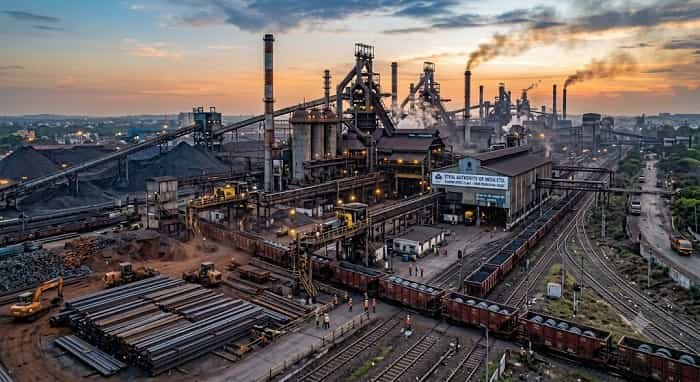
Manganese may not shine like gold, but it quietly strengthens the backbone of modern industry. Deep inside India’s mineral belts, dark brown and black manganese ore is dug out from rocky hills, sorted near mines, moved through rail lines, and finally reaches steel plants where it becomes part of stronger metal. Without manganese, the steel industry would lose one of its most important raw materials. From railway tracks and bridges to automobiles and construction steel, this mineral works silently behind India’s industrial growth.
According to the latest Ministry of Mines Annual Report 2025–26, India’s estimated manganese ore production stood at 3.58 million tonnes in 2025–26, slightly lower than the previous year. The same report names Maharashtra, Madhya Pradesh, Odisha and Andhra Pradesh as the leading producing states, while recent IBM production data shows Karnataka as the other major state in India’s manganese production map.
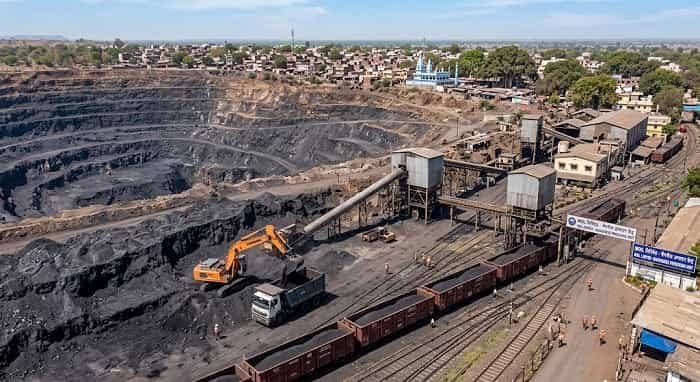
1. Maharashtra
Maharashtra is the largest manganese producing state in India in the latest 2026 estimate. The Ministry of Mines places Maharashtra at 32.80% of India’s manganese ore production for 2025–26, making it the top contributor.
The main manganese belt of Maharashtra lies around Nagpur and Bhandara, with important mining activity also connected to nearby mineral zones. This region has long been associated with manganese mining because of its favourable geology and strong mining infrastructure.
Maharashtra’s advantage is its organised production base. The state is home to important manganese operations of MOIL, India’s largest manganese ore producer. Nagpur also acts as a major administrative and trade centre for the manganese industry. Good rail connectivity, established mining leases, and proximity to steel-consuming markets make Maharashtra a powerful manganese state.
In 2026, Maharashtra’s position looks especially strong because it has moved ahead of Madhya Pradesh in the latest official estimate. Its production share shows that the state is not just a traditional manganese region but also the current leader of India’s manganese ore sector.
2. Madhya Pradesh
Madhya Pradesh ranks second among India’s top manganese producing states in 2026. The Ministry of Mines estimates its share at 29.75% of national manganese ore production in 2025–26.
The state’s most important manganese belt is around Balaghat, which is one of India’s best-known manganese mining regions. Balaghat has been linked with high-quality manganese ore for decades and remains a key centre for public-sector mining activity.
Madhya Pradesh has a long-standing identity as a manganese powerhouse. In many older rankings, it appeared as India’s leading producer. Even now, the gap between Maharashtra and Madhya Pradesh is not very large. This means the state continues to hold a very strong place in national manganese production.
The mineral is important for Madhya Pradesh because it supports mining employment, transport activity, local revenue, and supply to ferroalloy and steel industries. With Balaghat’s strong base and MOIL’s presence, Madhya Pradesh will remain one of India’s most dependable manganese states.
3. Odisha
Odisha stands third in manganese production with a 15.97% share in India’s estimated 2025–26 output.
Odisha is one of India’s richest mineral states. It is already famous for iron ore, chromite, bauxite and coal, but manganese also forms an important part of its mining economy. The major manganese-bearing areas are found in districts such as Keonjhar, Sundargarh and Koraput.
Odisha’s biggest strength is its link with the steel industry. Since manganese is heavily used in steel-making, Odisha’s mineral belt has natural demand nearby. The state has iron ore mines, steel plants, ports, rail networks, and large mining companies, which together make mineral movement easier.
Another important point is that Odisha has large manganese resources. So even though Maharashtra and Madhya Pradesh are ahead in production share, Odisha remains extremely important for India’s long-term manganese security. In future, better auctioning of mineral blocks and improved mining capacity can make Odisha even more powerful in this sector.
4. Andhra Pradesh
Andhra Pradesh is the fourth-largest manganese producing state in the 2026 estimate. The Ministry of Mines gives Andhra Pradesh a 12.41% share in India’s manganese ore production for 2025–26.
The state has important manganese deposits in parts of Srikakulam, Vizianagaram and Visakhapatnam regions. Andhra Pradesh has seen stronger activity in recent production data, and its share has improved compared with some older rankings.
The importance of Andhra Pradesh comes from both mining and location. The state has coastal access, industrial demand, and growing interest in minerals linked with steel and alloys. Its ports and transport links also make it useful for domestic supply chains.
For 2026, Andhra Pradesh’s rise is notable because it has moved into the top four in the latest Ministry estimate. This shows that the state is becoming more visible in India’s manganese production story.
5. Karnataka
Karnataka completes the top five manganese producing states in India. IBM’s recent statistical summary shows Karnataka as one of the major manganese producers, with 355.1 thousand tonnes in 2023–24 and 209.8 thousand tonnes during April–November 2024.
The most famous manganese belt in Karnataka is around Ballari, especially the Sandur region. Sandur has a long mining history and is known for both iron ore and manganese ore. The presence of established mining companies and mineral processing networks supports Karnataka’s position.
Karnataka’s manganese industry benefits from its connection with steel, sponge iron and ferroalloy units. The state has a strong industrial base, and manganese from its mining belts serves both local and outside markets.
Although Karnataka’s share can fluctuate from year to year, it remains one of India’s classic manganese-producing states. Its mineral reserves, old mining belts and industrial demand keep it firmly inside the top five.
Why Manganese Is Important for India
Manganese is mainly used in the steel industry. It improves steel strength, hardness and resistance. The Ministry of Mines also notes that India is still not fully self-sufficient in manganese ore and imports are needed to meet domestic demand.
This makes domestic manganese production very important. As India expands infrastructure, railways, automobiles, defence manufacturing and construction, demand for steel will remain high. That also means manganese-producing states will continue to play a major role in industrial growth.
Final Words
The top five manganese producing states in India in 2026 are Maharashtra, Madhya Pradesh, Odisha, Andhra Pradesh and Karnataka. Maharashtra now leads the list, while Madhya Pradesh remains very close behind. Odisha provides a strong mineral base, Andhra Pradesh is rising fast, and Karnataka continues to hold its historic place in the manganese map of India. Together, these five states supply almost the entire domestic manganese ore production and support India’s steel-driven growth story.